300x85-png.webp)


 Hong Kong
 Singapore
 China
China Dubai
Dubai Thailand
 United Kingdom
 Mexico
Japanese encephalitis (JE) is a virus transmitted by mosquito bites. JE is most commonly found in Asia and the Western Pacific. Expats and visitors should consider getting vaccines and applying preventative measures to avoid Japanese encephalitis during and after your trip.
Discover the world’s top
health insurers.
Compare quotes with
a click of the button.
Are you traveling to Asia or the Western Pacific? Has your doctor recommended that you receive the Japanese encephalitis vaccine before your visit?
In this article, Pacific Prime has gathered preventative measures for Japanese encephalitis and travel insurance options that may help when traveling to Asia and the Western Pacific. Don’t forget to check out our article on the 14 most common diseases while traveling abroad!

Where You Can Catch Japanese Encephalitis
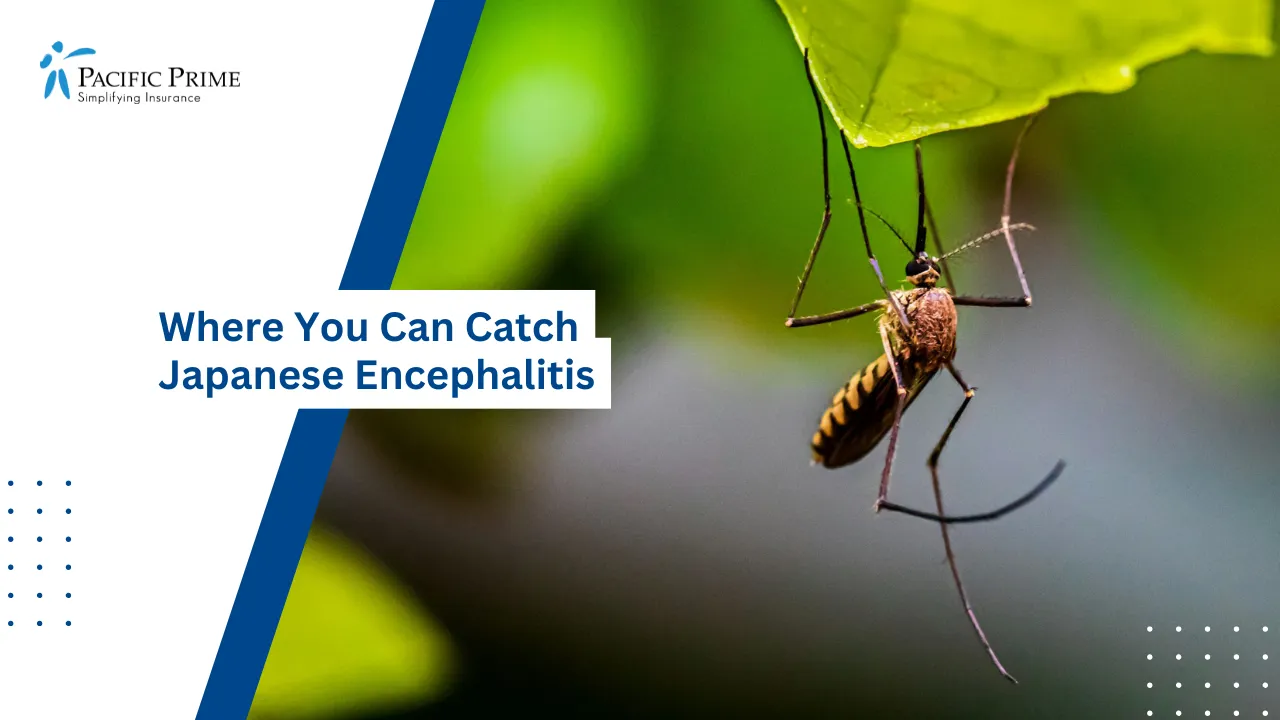
Japanese Encephalitis is most commonly transmitted in Southeast Asia, East Asia, and the Pacific Islands by mosquitoes with the virus. It usually occurs in rural and agricultural areas. Japanese encephalitis is usually spread in areas with these types of characteristics:
- Agricultural areas
- Rice cultivation areas
- Flood irrigation
This chart lists the countries where travelers are at risk of catching Japanese encephalitis and the transmission season in each.
| Country | Transmission Season |
| Australia | December–May |
| Bangladesh | Year-round |
| Bhutan | Unknown |
| Brunei Darussalam | Unknown |
| Burma (Myanmar) | Year-round |
| Cambodia | Year-round with peak season May–October |
| China | Peak season June–October |
| India | Northern India: May–November
Southern India: Year-round with peak season May–November |
| Indonesia | Year-round with peak season varied by island |
| Japan | June–October |
| Lao People’s Democratic Republic | Year-round with peak season June–September |
| Malaysia | Year-round with pearson season in Sarawak from October–December |
| Nepal | Peak season June–October |
| North Korea | Unknown proximity to South Korea suggests peak season May–November |
| Pakistan | Unknown |
| Papua New Guinea | Presumed year-round |
| Philippines | Year-round with peak season April–August |
| Russia | June–September |
| Singapore | Year-round |
| South Korea | May–November |
| Sri Lanka | Year-round with peak season November–February |
| Taiwan | Peak season May–October |
| Thailand | Year-round with peak season May–October, especially in Northern Thailand |
| Timor-Leste | No data; Proximity to West Tamor suggests year-round |
| Viet Nam | Year-round with peak season May–October, especially in Northern Viet Nam. |

When and How Encephalitis is Spread
Japanese encephalitis is first found in pigs and birds, then spreads to mosquitoes who bite those infected animals. Humans catch this virus when they are bitten by an infected mosquito. Humans, however, are dead-end hosts, meaning they cannot spread it to other humans.
This virus is usually spread seasonally, with peak transmission happening in the summer and fall months.
Who is at Risk of Getting Encephalitis
Travelers or expats planning to travel or move to one of the countries in Asia or the Western Pacific may be at extremely low risk of getting Japanese encephalitis. However, the risk may be higher depending on your destination, the duration of your stay, the season, and your activities.
Your risk may be higher if you plan to:
- Visit the area for four weeks or longer, such as for expatriates moving to Asia
- Spend extended periods of time in rural areas
- Have regular, short trips to endemic areas
- Move to an endemic region
- Tour or stay near a rice growing area
- Travel during the summer when mosquitos are more common
- Visit a tropical or subtropical area (mosquitoes spread the virus all year long in these climates)

Common Symptoms of Japanese Encephalitis
Most cases of Japanese encephalitis may not present any symptoms at all, and mild cases may show brief symptoms that are similar to the flu. About 1 in 250 people may develop extreme symptoms if the infection spreads to the brain, causing seizures, confusion, limited ability to speak, or paralysis.
Symptoms usually become apparent five to 15 days after the date of infection.
Flu-like symptoms include:
- Headache
- High temperature
- Feeling or being sick
- Tummy pain
Severe symptoms include:
- Severe headache
- Feeling confused
- Paralysis (not being able to feel or move parts of your body)
- Seizures (fits)
Common Treatments for Japanese Encephalitis
There is no specific treatment for Japanese encephalitis. However, the CDC says that when treating encephalitis, hospitalization and close observation is usually required. Treating and supporting the complications that come because of JE will determine the main plan of care.

What To Do if You Get Sick Abroad With Japanese Encephalitis
You will need to be treated at a hospital if you develop severe symptoms of Japanese encephalitis. Japanese encephalitis can be life-threatening. Patients should seek healthcare immediately if they start developing symptoms during or after traveling to the areas with Japanese encephalitis.
If you are a digital nomad moving to Asia or the Pacific Islands, we recommend you invest in your health prior to your trip, including getting necessary vaccinations and ensuring you have sufficient insurance coverage, so you can always seek care whenever you need it.
Once you are on your trip, make sure to follow proper preventive measures to avoid getting Japanese encephalitis.
How to Avoid Japanese Encephalitis When Traveling Abroad
If you plan to travel to regions where Japanese encephalitis is spread, it is best you prepare ahead of time by securing international health insurance or extensive travel medical insurance, getting the JE vaccine, and learning safety precautions you can take while in the region.
A few things you can do while traveling to prevent Japanese encephalitis:
- Sleep in rooms with close-fitting gauze over the windows and doors
- If you plan to sleep outside, use a mosquito net with insecticide (learn how to use mosquito nets correctly)
- Wear long-sleeved shirts, pants, and socks
- Use high-quality insect repellent
- Use air-conditioning if available
- Don’t let mosquitoes lay eggs in or near water by weekly emptying, scrubbing, covering, or throwing away items (both inside and outside) that carry water
- Keep mosquitos out of your hotel or lodging
- Treat your clothing and gear with permethrin

Japanese Encephalitis Travel Vaccine
There is a two-dose Japanese encephalitis vaccine. If you are an expatriate moving to regions where JE is spread; if you plan to travel to rural regions; or if you plan to hike, camp, or stay in places without AC, screens, or bed nets, it is recommended you consider getting this vaccine.
This vaccine is recommended to travelers who:
- Plan to move to an area where Japanese encephalitis is transmitted
- Spend a month or more in an area with Japanese encephalitis
- Travel regularly to areas with Japanese encephalitis
Frequently Asked Questions
What causes Japanese Encephalitis?
Japanese encephalitis is caused by a virus transmitted by mosquito bites.
Is Japanese encephalitis curable?
There is no specific treatment for Japanese encephalitis. Rest, sufficient fluid intake, and over-the-counter medications are usually recommended to alleviate symptoms. If the disease has progressed in severity, hospitalization and close observation by doctors are required.
What are the odds of getting Japanese encephalitis?
The risk of getting Japanese encephalitis is relatively low for travelers and expats. Still, you should be cautious when traveling to the areas where Japanese Encephalitis spreads, especially if you plan to stay long-term.

Conclusion
Expats and travelers visiting areas with Japanese encephalitis in Asia and the Western Pacific should take appropriate measures to avoid mosquito bites and invest in their healthcare, including getting vaccinations and securing sufficient insurance coverage.
Expats moving abroad should start their preparations by getting an international health insurance plan. Not only can it bring you peace of mind while abroad, but in the event you are infected, you will have coverage to get the care you need.
Pacific Prime is a leading expert on international insurance you can feel confident turning to when your need arises. To see which plans are available to you in the country you will soon be traveling to, check out the health insurance plans available in Asia and Australasia.

Jantra curates and reports on the results of Pacific Prime’s monthly newsletters, as well as manages Pacific Prime’s Deputy Global CEO’s LinkedIn posts. Complemented by her background in business writing, Jantra’s passion for health, insurance, and employee benefits helps her create engaging content – no matter how complex the subject is.
Growing up as a third-culture kid has given her a multicultural perspective that helps her relate to expats and their families while 8 years of working remotely have given her unique insight into hybrid work arrangements and enthusiasm for employee benefits.
- Jobs in Italy for Americans: Visa, Salary & Career Guide – October 15, 2025
- Healthcare in Singapore vs USA : Funding, Coverage, and Key Differences – August 15, 2025
- Living Abroad in the Philippines : Costs, Visas, and Expat Tips – August 12, 2025



Comments