300x85-png.webp)


 Hong Kong
 Singapore
 China
China Dubai
Dubai Thailand
 United Kingdom
 Mexico
US citizens moving to Dubai need a valid residence visa, proof of health insurance, and authenticated US documents to meet UAE requirements. Over 40,000 Americans already live in Dubai, making it one of the largest expat communities in the region.
Discover the world’s top
health insurers.
Compare quotes with
a click of the button.
This guide covers key steps for relocation, including visa options for US citizens, medical fitness tests, mandatory health insurance, cultural expectations, and cost of living. It also serves as a comprehensive guide to moving to Dubai, helping Americans prepare for a new journey in the UAE.
Visa Requirements for Americans in Dubai
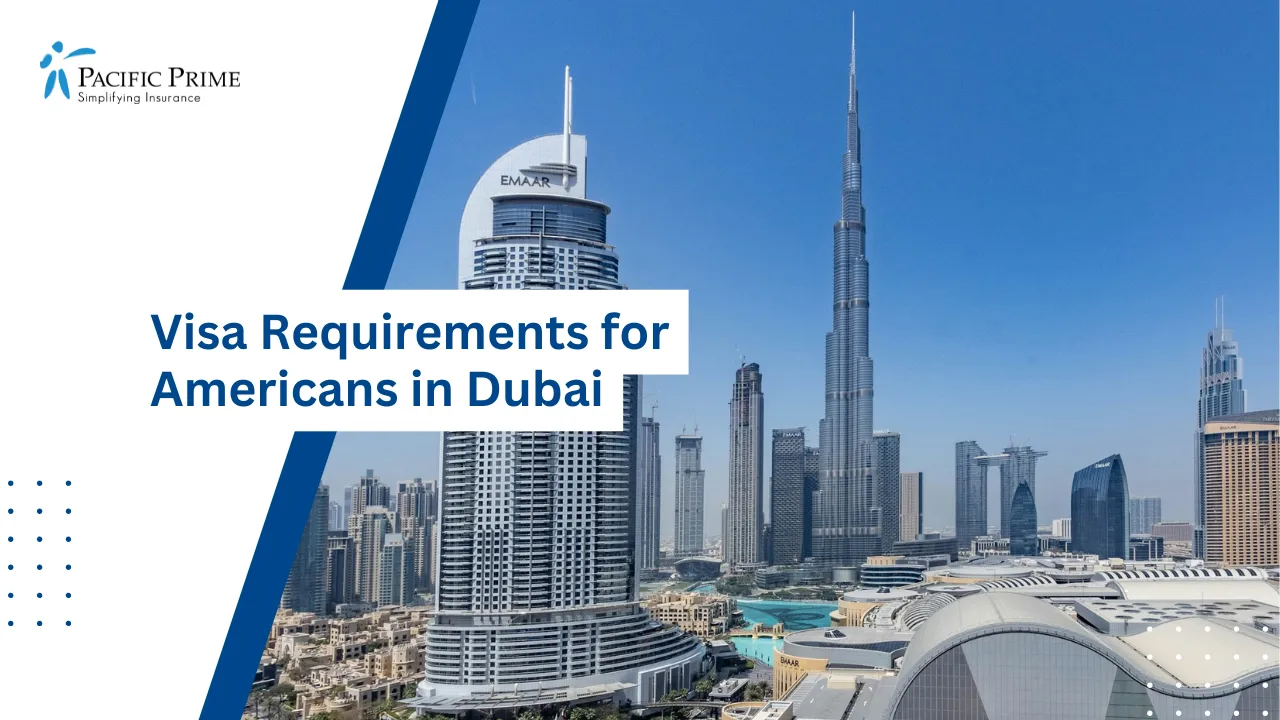
Applying for the UAE visa requires medical fitness test results, proof of valid health insurance, and a set of U.S. authenticated documents that must be submitted to the UAE authorities.
The visa types for US citizens planning to make their way to Dubai are as follows:
Retirement visas:
Retirement visas are for those over the age of 55 with a minimum of $272,255 in either savings or property value, or a monthly income of $4,080 or more.
Employment visas:
Employment visas for those who work in the private sector or free zone under a company registered in Dubai. The typical duration of this visa is 2 years.
Investor visas:
Investor visas are for those who intend to invest USD $19,600 or more in a company based in the UAE, either through the purchase of shares or the formation of their own company.
Property owner visas:
Property owner visas are for real estate investors that own properties with a value equivalent to USD $204,190 or more. The typical duration of this visa is around 2 years.
Remote work visas:
For those who wish to relocate to Dubai to work remotely, they can apply for remote work visas, which typically last for 1 year.
Dependent visas:
Dependent or family visas are a must, especially if you’re planning on moving to Dubai with your spouse or children. In this case, you must have a monthly income of at least USD $1,090 with accommodation for your stay in Dubai.
Required Documents for US Citizens
When applying for a visa, there are a set number of documents that you must submit, such as:
These documents include:
- Health certificates
- Education certificates
- Passport valid for at least 6 months
- Passport-sized photos
Please note that you must also have all these documents authenticated by the US Department of State.
Medical Tests for US Expats in Dubai
Before moving to Dubai, you’ll need a medical fitness test and proof of compliant health insurance as part of the visa application process. The medical test involves a blood test and chest X-ray to determine whether you are positive for communicable diseases such as the following:
- Tuberculosis
- HIV/Aids
- Syphilis
- Hepatitis B
Health Insurance Rules for US Expats
Since August 1, 2011, the UAE government has mandated that UAE visitors applying for a new visa have medical insurance coverage. Generally, companies that you work for in Dubai will provide you with health insurance to cover your needs.
Please note, however, that in most cases, expatriates looking to live and work in the UAE are recommended to get covered by international health insurance for more comprehensive coverage.


Global Health Insurance for US Expats
International health insurance provides U.S. expats with portability and comprehensive medical coverage in Dubai, back home, and any other locations around the world. These plans offer direct billing, lifetime renewability, access to the best healthcare, and inpatient and outpatient coverage.
Family Medical Insurance for Americans in Dubai
Family health insurance plans provide comprehensive international coverage for all family members. Whether you’re seeking quality healthcare, protection from unexpected medical costs, maternity benefits, or wellness services for your children, these plans are essential for families moving to Dubai.
Steps if You Fail the Dubai Medical Exam
If you fail the medical exam, your visa may be denied or revoked, or you may even face deportation, depending on whether you are a resident or applying for a new visa. It is crucial to monitor your health status and ensure that you meet the UAE’s medical fitness requirements.
Reasons for Dubai Visa Rejection
The UAE authorities outright reject visa applications if an individual fails the medical fitness test in order to prevent the spread of communicable diseases in Dubai. This is enforced as part of the UAE’s strong community health-oriented policy.
Conditions for Visa Revocation in Dubai
If a visa holder is found to be physically unfit, their visa may be revoked, and they may be detained in order to prevent the spread of infectious diseases. This can happen during and after the visa renewal process.
Deportation Risks for Health Ineligibility
In serious situations where an individual is found to have a serious health condition or tested positive for a highly contagious disease that poses a threat to public health, such as tuberculosis, they may be subject to deportation.
Cultural Differences Between Dubai and the US
For most U.S. expats, they may initially perceive Dubai as westernized. Due to the fact that Dubai is ruled by Sharia law and has different cultural customs, certain actions are prohibited, such as cohabitation between unmarried couples, homosexuality, and being intoxicated in public.
Sharia Law and Expat Expectations
The UAE’s legal system, including Dubai’s law, is based on Sharia law, derived from the holy Quran. This law governs etiquette and behavior in the UAE as a whole. While it’s slightly more relaxed towards westernization, it’s important for U.S. citizens to respect this law while in Dubai.
Cohabitation Rules in Dubai
The cohabitation of unmarried couples may result in legal consequences in Dubai if not permitted by the landlord. While there may be no specific law criminalizing the cohabitation of unmarried couples, it is widely considered “haram” or a violation of cultural norms.
Alcohol and Drug Laws in Dubai
Despite Dubai’s relaxed stance on some Western norms, the consumption of alcohol is heavily regulated and requires a license to buy or sell. As a result, most people drink alcohol at home or within the confines of a bar or club. Note also that public intoxication is a criminal offense.
LGBTQ+ Laws and Restrictions in Dubai
In the UAE as a whole, homosexuality is illegal. While the general public’s view of the LGBTQ+ community is more accepting in Dubai, you may need to be more covert in other parts of the United Arab Emirates.
Healthcare System in Dubai for US Expats

The good news for U.S. citizens is that the quality of healthcare in Dubai is of the highest standards, with services in both English and Arabic and over 130 private healthcare facilities across numerous areas of specialization.
Public vs. Private Healthcare in Dubai
Public healthcare in Dubai is primarily funded and used by Emirati citizens, who make up around 15% of Dubai’s population. While public healthcare is high-quality, most expats carry private health insurance for faster, cost-efficient care and access to the 130 private hospitals in Dubai.
What’s more, private health insurance provides expats with coverage and access to specialized care facilities for every imaginable need. This should give U.S. citizens with special treatment needs peace of mind in the event that they require medical attention while in Dubai.
Top Private Hospitals in Dubai
With an average healthcare score of 80%, the best private hospitals in Dubai are Rashid Hospital, Mediclinic City Hospital, the American Hospital Dubai, Aster Hospital, and Al Zahra Hospital. Expats can access care in these hospitals through private health insurance.
Rashid Hospital Overview
Rashid Hospital is a tertiary, academic medical center in Dubai with cutting-edge emergency and trauma care. They offer access to hospitals with approximately 762 beds and advanced medical, surgical, ICU, and operative facilities.
Mediclinic City Hospital Overview
Mediclinic City Hospital is Dubai’s first multi-disciplinary hospital, offering state-of-the-art healthcare facilities. As of today, they continue to dominate Dubai’s healthcare landscape in terms of skilled medical staff, range of services, and standard of equipment.
The American Hospital Overview
When it comes to private hospitals in the Middle East, American Hospital is the first to receive Joint Commission International (JCI) accreditation, and its laboratory is the first in the region to receive accreditation from the College of American Pathologists. Additionally, this medical center is the very first affiliate of the renowned Mayo Care Network.
Aster Hospital Overview
Known as one of Dubai’s premium hospitals, Aster Hospital offers the highest quality of treatment under the ICMR and WHO protocols, enlisting world class medical talent as part of their staff and offering access to the world’s best medical facilities.
Al Zahra Hospital Overview
In 2013, Al Zahra Hospital opened in Dubai with the intention of providing high-quality medical treatment. They have state-of-the-art facilities, are staffed by highly trained medical professionals, and collaborate with reputable organizations from all over the world on a case-by-case basis.
Cost of Living in Dubai for US Expats
According to livingcost.org, the cost of living in Dubai for an individual is USD $2,597 and $6,100 for a family. Comparatively speaking, the average monthly cost of living in the United States is USD $3,315 for an individual and $7,721 for a family.
Average Rent Prices in Dubai
The average monthly rent in Dubai’s downtown area is around USD $1,861 for a one-bedroom and $3,836 for a three-bedroom apartment. Outside of the downtown area, the monthly rent for a one-bedroom is USD $1,320, and the monthly rent for a three-bedroom apartment is $2,755.
For your convenience, we have provided a summary table of rental prices:
| Apartment Type | The monthly rent |
| 1 Bedroom Apartment in the City Center | AED 6835.17 (USD $1,861) |
| 1 Bedroom Apartment Outside the Center | AED 4,848.20 (USD $1,320) |
| 3 Bedroom Apartment in City Center | AED 14,089.68 (USD $3,836) |
| 3 Bedroom Apartment Outside the Center | AED 10,119 (USD $2,755) |
Public Transport Costs in Dubai
The cost of public transportation for taxis is calculated at USD $1.66 per kilometer. For buses, it costs $2.07 for a ticket. Lastly, for a liter of gasoline, it costs approximately $1.13.
Here is a summary table of public transportation costs for your convenience:
| Cost Type | Fares/Prices | Average Cost |
| Taxis Fares (per 1 km) |
|
|
| Single Ticket for Buses |
|
|
| Monthly Ticket for Buses |
|
|
| Petrol |
|
|
Preparing for a Move from the US to Dubai
Moving to Dubai comes with a lifetime’s worth of experiences and opportunities for both you and your family. Whether it is for your career, better investment opportunities, better education for your children, or to become a citizen of the UAE, this desert jewel has everything you need.
However, if you’re Canadian, learn more about moving to Dubai from Canada in our article. If you’re planning to further your career in the UAE, here’s how to obtain a Dubai work visa to keep you up to date on what’s required visa-wise and also what it’s like to work there.
Lastly, it’s important to consult with a broker to learn more about your individual healthcare needs and requirements, including the healthcare requirements of your family members.
Pacific Prime can assist you by providing recommendations based on your unique needs, pre-existing conditions, and budget.
For more information, check out our blog section or contact us.
FAQs on Moving from the US to Dubai
Is Dubai safe for U.S. citizens?
While Dubai is considered one of the safest cities in the world, the risk of terrorist, drone, or missile attacks remains a major threat to the UAE, with the U.S. travel advisory placing the emirates at level 2, meaning U.S. citizens should exercise increased caution if they choose to travel there.
Can an American citizen settle in Dubai indefinitely?
The UAE Golden Visa allows foreign talents to relocate to the UAE and take advantage of a plethora of special privileges. The visa grants multiple entries within the six-month validity period. Moreover, a residence permit can be renewed for up to ten years at a time.
Is it possible for a US citizen to purchase a home in Dubai?
Foreigners, including U.S. citizens, can buy real estate in the UAE only in designated ‘freehold zones,’ which cover both the central and residential areas of Dubai. Popular options include Downtown Dubai, Dubai Marina, Jumeirah Beach Residence (JBR), Arabian Ranches, Al Furjan, and more.

Serena earned her Bachelor’s Degree in Psychology from the University of British Columbia, Canada. As such, she is an avid advocate of mental health and is fascinated by all things psychology (especially if it’s cognitive psychology!).
Her previous work experience includes teaching toddlers to read, writing for a travel/wellness online magazine, and then a business news blog. These combined experiences give her the skills and insights she needs to explain complex ideas in a succinct way. Being the daughter of an immigrant and a traveler herself, she is passionate about educating expats and digital nomads on travel and international health insurance.
- How to Compare Travel Insurance Plans the Smart Way – October 21, 2025
- Best Hospitals in the UAE: Top Picks in Dubai and Abu Dhabi – October 21, 2025
- How Much is a Doctor Visit in Dubai Without Insurance? – October 21, 2025



Comments