300x85-png.webp)


 Hong Kong
 Singapore
 China
China Dubai
Dubai Thailand
 United Kingdom
 Mexico
When it comes to Australia’s options for health insurance, both public and private health insurance are available. However, Australians tend to lean towards private health insurance thanks to added perks such as shorter waiting times and the option for extra coverage.
Discover the world’s top
health insurers.
Compare quotes with
a click of the button.
Are you an expat looking to relocate to Australia with your family? Are you hoping to ensure your well-being abroad? In this blog post, Pacific Prime will go over health insurance in Australia for expats, along with options available and the possible cost of health insurance.
The Australian Healthcare System

Offering a multitude of services ranging from preventative to specialist healthcare, Australia has one of the world’s most comprehensive healthcare systems. Two options exist: public and private health insurance.
The public health insurance system consists of public hospitals, community services, public health initiatives, and government-based organizations.
Meanwhile, the private health insurance system consists of private hospitals and clinics, pharmacies, and private doctors who provide care to the public, directly billing the government when seeing the patients.


Public Health Insurance in Australia
Australia has a universal public healthcare system called Medicare, with public health insurance delivered through public hospitals and health initiatives, community services, and government-based organizations.
Public hospitals offer medical appointments, medications, and high-quality care at low costs or no cost at all for those who can access Medicare.
Public Health Insurance Drawbacks
However, much like any other country, the public health insurance system in Australia also has its fair share of drawbacks. One main drawback is longer waiting times for non-urgent or non-emergency treatment.
Also, patients usually can’t choose their doctor and they’ll have to go with whichever doctor is on duty for their specific health condition. Sharing a room with other patients can also be problematic, as is needing to travel to access specialist care for rural areas.
Private Health Insurance in Australia
Private health insurance in Australia is a preferred alternative among expats thanks to additional perks, and is offered through private hospitals and clinics, along with pharmacies and private doctors providing care to the public.
Where private health insurance in Australia shines is shorter waiting times and freedom of choosing doctors and specialists for patients. Regardless of whether the treatment is urgent or not, patients won’t have to wait for long to get the treatment they need.
Furthermore, patients can also get better amenities such as a more comfortable private room. For the reasons stated above, expats in Australia prefer private health insurance.
Private health insurance in Australia covers additional health services not covered in public health insurance under Medicare. These include physiotherapy, dental, and optical care.
Private Health Insurance Drawbacks
However, depending on your coverage, the cost of your private health insurance in Australia can be expensive.
Moreover, there may also be certain treatment or procedure limitations which private health insurance in Australia can’t cover, such as cardiac procedures, joint surgeries, rehabilitation, and plastic or reconstruction surgery.
The Cost of Health Insurance in Australia
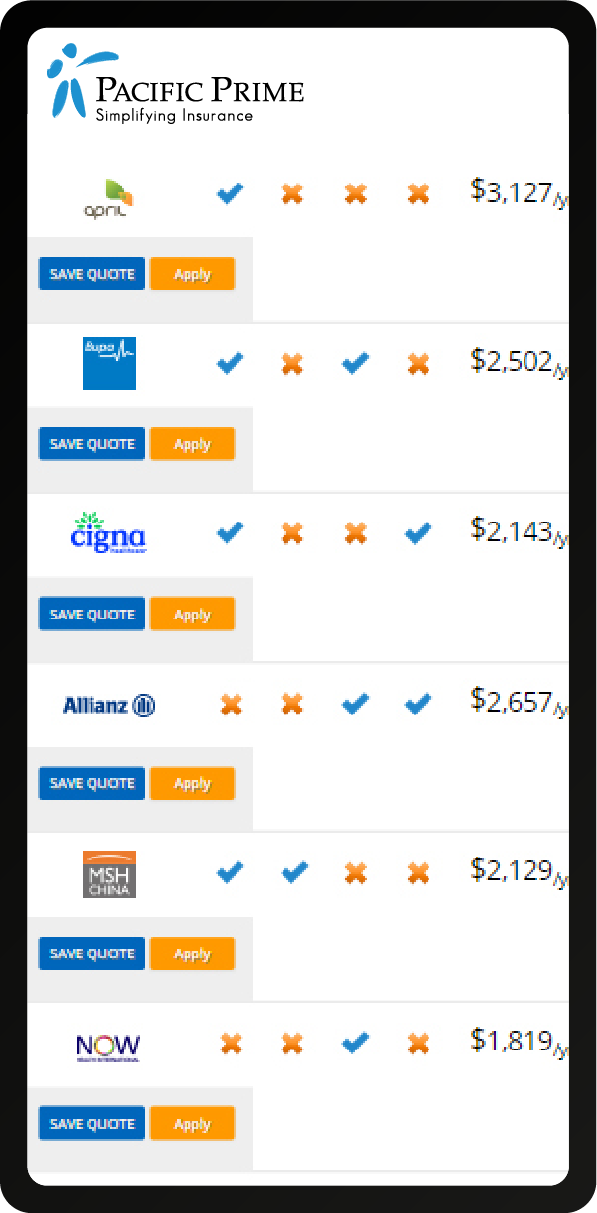
The exact cost of health insurance in Australia will vary depending on different factors such as age, selected policy, family group (as in how many people are being insured), and location.
For instance, the cost of health insurance progressively increases as one ages, and the same rules apply to larger families. Whichever state in Australia you live in, health insurance costs fluctuate all throughout.
Basic policies are more affordable but at the cost of limited coverage. Meanwhile, more comprehensive policies offer a wider range of coverage but subsequently cost more. Extra coverage such as dental and vision or physiotherapy can also contribute to your Australian health insurance costs.
Make sure that you consider your specific healthcare needs carefully before deciding on a health insurance plan, as the most inexpensive plan may not give you the right amount of coverage you need. Prices will also vary depending on certain insurance providers.
Are Expats Eligible for Health Insurance in Australia?
Medicare is available to all Australian citizens and permanent residents, and even expats are eligible for coverage as long as they qualify as permanent residents.
However, keep in mind that not exactly every visitor to Australia is eligible. Expats moving to Australia with a working visa instead of a permanent residency visa are ineligible for health insurance. They will then need to prove that they have private health insurance.
All tourists and other short-term visitors must also carry their own private travel medical insurance coverage.
Australia’s Reciprocal Healthcare Agreements
Australia has reciprocal healthcare agreements with eleven countries, which provide emergency care to Australians. Majority of the agreements indicate that the care must be urgent and medically necessary, and the urgent healthcare will involve co-payment from patients.
Below are the eleven different countries under Australia’s reciprocal healthcare agreement:
- Belgium
- Finland
- Italy
- Malta
- The Netherlands
- New Zealand
- Norway
- Ireland
- Slovakia
- Sweden
- The United States
Even if citizens from any of the aforementioned countries lack permanent residency in Australia, they are still eligible for most types of basic public healthcare.
Applying for Medicare
Applying for Medicare health insurance involves submitting basic documents such as passports and visas along with proof of permanent residency, and permanent residents can use the official Medicare site to check their eligibility and apply accordingly.
The website will go over which specific documents you need and what steps you can expect in your application process. Below are the documents required for the application:
- Current passport or Immicard
- A valid visa
- Proof from the Department of Home Affairs showing that you’ve applied for permanent residency.
Once you have all your documents, proceed to the government service center. If all goes well, you will get a Medicare number right away and you should get a physical Medicare card by mail within a few weeks.
Frequently Asked Questions
What is the average cost of health insurance in Australia?
The average cost of private health insurance in Australia is AUD $160 per month for one person. However, prices can vary depending on various factors such as your location, age, coverage, or how many family members you bring along.
What does Medicare not cover in Australia?
Medicare does not cover private patient hospital costs, ambulance services, and other out-of-service such as dental, physiotherapy, glasses, and contact lenses, as well as hearing aids.
Do I need health insurance to live in Australia?
People who are looking to move to Australia should carry their own private health insurance policy in order to cover their healthcare expenses. These include applicants for visa subclass 482, subclass 485, and other visas that feature a 8501: Health Cover condition.
Conclusion
Health insurance in Australia is theoretically accessible to everyone, including expats, provided that they have permanent residency. Available in the form of both public and private health insurance, both forms of health insurance can cover a wide range of areas to your liking.
While the cost of health insurance in Australia can be expensive depending on which specific state you live in, your age, how many family members you brought along, or your chosen policies, always make sure that you consider your specific healthcare needs carefully.
Being a leading international health insurance broker, Pacific Prime has over 20 years of matching both local citizens and expats with their ideal health insurance plan of choice that matches not only their budget but also their specific healthcare needs.
Whether it’s travel insurance, individual health insurance, or family health insurance, our experts will be glad to assist you with knowledge, impartiality, and service-mindedness.
If you still have any further questions, please don’t hesitate to speak up and feel free to get in touch with us.

Serena earned her Bachelor’s Degree in Psychology from the University of British Columbia, Canada. As such, she is an avid advocate of mental health and is fascinated by all things psychology (especially if it’s cognitive psychology!).
Her previous work experience includes teaching toddlers to read, writing for a travel/wellness online magazine, and then a business news blog. These combined experiences give her the skills and insights she needs to explain complex ideas in a succinct way. Being the daughter of an immigrant and a traveler herself, she is passionate about educating expats and digital nomads on travel and international health insurance.
- How to Compare Travel Insurance Plans the Smart Way – October 21, 2025
- Best Hospitals in the UAE: Top Picks in Dubai and Abu Dhabi – October 21, 2025
- How Much is a Doctor Visit in Dubai Without Insurance? – October 21, 2025



Comments