300x85-png.webp)


 Hong Kong
 Singapore
 China
China Dubai
Dubai Thailand
 United Kingdom
 Mexico
Congenital conditions, or congenital diseases, are structural or functional defects that often develop prior to a child being born. Some conditions or defects may also require expensive treatment or surgeries. However, not every international health insurance plan will cover such conditions.
Discover the world’s top
health insurers.
Compare quotes with
a click of the button.
It is normal for parents to be worried if their newborns are diagnosed with any congenital condition, whether it’s mild or severe. Thus, future expat parents should then consider medical coverage for congenital conditions in case their child is born with a birth defect.
Are you an expat couple transitioning to parenthood and you’re expecting a child soon? Are you looking to safeguard your pregnancy abroad should anything go wrong? Today, we will be going over congenital conditions coverage to give you peace of mind for your pregnancy abroad.
What are Congenital Conditions?

Congenital conditions, also known as congenital diseases, are unusual structural or functional conditions and disabilities in newborns and are often inherited. Such conditions can manifest as early as when the baby is still in the womb.
The following are some common examples of congenital conditions:
- Cleft lip: A cleft lip is a split or opening in the upper lip, which occurs when the development of facial features in an unborn baby don’t completely close. Babies with cleft lips, which can be unilateral or bilateral, may also experience cleft palate (a cleft in the roof of the mouth).
- Clubfoot: Clubfoot affects the muscles and bones in the foot, causing the foot to point downwards and inwards. A baby with clubfoot can have the defect in one or both feet.
- Down Syndrome: Facial characteristics in people with Down Syndrome include an overall flattened appearance to their faces, upward-slanting eyes, short necks, small ears, and their tongues usually stick out of their mouths.
- Heart defects: Congenital heart defects manifest at birth and can affect how blood flows through a baby’s heart and out to the rest of the body. Conditions range from mild (such as a small hole in the heart) to more severe cases (such as missing or poorly formed parts of the heart).
- Vertebral anomalies: Many congenital vertebral anomalies are related to spina bifida, which is a condition that affects the spine and is usually apparent at birth.
Potential Causes of Congenital Conditions
While specific causes for congenital conditions remain unanswered, experts believe congenital conditions could stem from genetics. More specifically, genetic discrepancies such as structural genetic mutation or chromosomal anomalies, cause abnormal development.
Certain environmental causes such as medication or alcohol consumption, as well as smoking during pregnancy, can also result in congenital conditions and the mispositioning of the baby in the womb.
Detection and Treatment of Congenital Conditions
Certain birth defects can be detected before childbirth, while certain birth defects aren’t detected until the child is born, or sometime after the birth.
Screening tests will help detect birth defects. For instance, if any screening test result shows up as positive, your baby is more likely to develop a birth defect and the doctor may require a diagnostic test to make sure.
Whether or not congenital conditions can be treated depends on the severity of the condition. Some babies may be born with mild defects that can heal over time, while some may be born with certain diseases that require open surgeries or transplants such as heart-related diseases.
Meanwhile, in the worst-case scenario, other disorders such as cerebral palsy or cystic fibrosis will require long-term medical care but at the cost of being incurable.
Lowering the Risk of Birth Defects During Pregnancy
While birth defects can’t be truly prevented, there are ways for future mothers to lower the risk of birth defects in their children, such as taking prenatal vitamins or supplements with folic acid to prevent spinal and brain defects.
Pregnant women should also avoid drug and alcohol consumption, and tobacco use.
Congenital Conditions Coverage

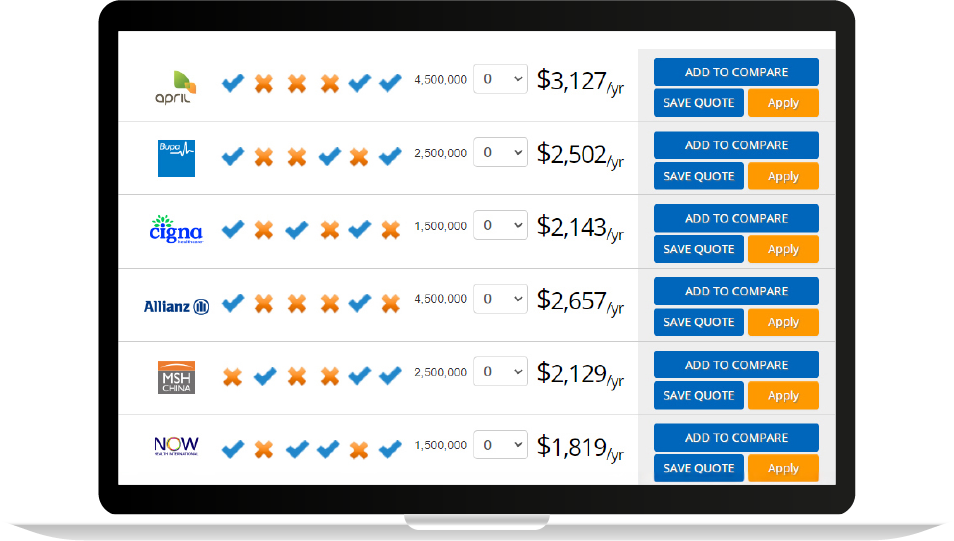
Most maternity insurance plans will offer congenital conditions coverage with their corresponding treatments, medication, or service, but not all. Please check carefully with your specific health insurance provider to see if they offer congenital conditions coverage.
International Healthcare Providers with Congenital Conditions Coverage
AXA
AXA’s international pregnancy and maternity insurance offers comprehensive care throughout your pregnancy via a midwife or general practitioner, childbirth coverage, newborn checkups while still in the hospital, postnatal checkups, and ultrasound scans with tests to check for congenital conditions.
Cigna
Cigna’s international health insurance for families is a comprehensive health insurance plan for expat families. The offered benefits include infertility investigation and treatment coverage (for platinum plans), routine health checkups and evaluations for children, and maternity and newborn care.
What is International Maternity Insurance?
International maternity insurance is a pregnancy-centric insurance plan designed for expats living abroad. Keep in mind that when you’re buying an international maternity insurance plan, you’re actually buying a full international health insurance plan with maternity benefits.
The Waiting Period in Your International Maternity Insurance Plan
The waiting period in international maternity insurance plans is 10-24 months before the effective date of your pregnancy benefits. A requirement of the waiting period is you must have your health insurance plan for the full duration of the waiting period before your pregnancy coverage starts.
Due to the strict waiting period for international pregnancy coverage, any expat woman who is about to become pregnant while living overseas must obtain a health insurance policy, featuring maternity benefits, at least a year or two in advance.
Coverage for Pregnancy and Childbirth Complications
Maternity insurance can include coverage for pregnancy and childbirth complications. Examples of these complications include anemia, anxiety, diabetes, or high blood pressure. Make sure you know which particular pregnancy and childbirth complications your selected pregnancy insurance plan covers.
Newborn Care Coverage
Newborn care could involve immediate care upon the child’s birth, including helping the infant dry up, breathing assessment, breastfeeding support, nurturing care, and assessment of potential health problems.
Depending on the country you’ve relocated to, certain types of newborn care could also include additional services such as vaccinations and doctor visits or infant hospitalization at the neonatal intensive care unit (NICU).
Childbirth Services Coverage
Expats giving birth abroad should know whether or not childbirth services covered by their pregnancy insurance include delivery expenses, a cesarean section (c-section), and home birth, as well as the total amount of coverage for each service, and how long the coverage lasts.
Keep in mind, though, that not every pregnancy insurance policy will cover home birth.
What to Consider When Obtaining International Maternity Insurance

Expat parents in search of suitable maternity insurance plans should consider carefully if the plan covers pregnancy and childbirth complications, newborn care, congenital conditions, childbirth services, and infertility treatment.
Carefully decide how much coverage you actually need, including options for additional benefits. Also, please be aware of your international maternity insurance plan’s waiting period.
Frequently Asked Questions
Is pregnancy insurance guaranteed for expat dependents?
In certain countries, employers will offer health insurance (including maternity insurance) coverage for dependents as well. On the contrary, in some other countries such as the UAE, employers do not cover dependents and they will need to obtain health insurance themselves.
What if there’s a language barrier in pregnancy and delivery?
If you’re an expat and you don’t speak the local language of the country you’re in, you have the option of selecting a private health insurance plan with maternity coverage. This is because private health insurance allows access to healthcare facilities with multilingual medical staff.
Can I select my own OB-GYN when I’m abroad?
With most international pregnancy plans, you can select your preferred obstetrician or midwife. Meanwhile, some plans require you to choose physicians who are considered in-network with the insurance provider, while other plans may be even more flexible.
Conclusion
Congenital conditions are something that future parents, expats and locals alike, will definitely be worried about. While some mild conditions are curable, some may not be.
And since not every international pregnancy insurance policy will offer coverage for newborn congenital conditions, parents should discuss with their specific insurance provider to find the best working solution to ensure their child’s health upon birth.
Known as a leading international health insurance provider, Pacific Prime has over 20 years of experience in matching both expats and locals to their health insurance plan of choice that matches not only their budget but also their specific healthcare needs.
Whether you’re a local or an expat living overseas, Pacific Prime and our team of experts are ready to help you with service-minded, knowledgeable, and impartial advice.
So, if you have any further questions at all, please don’t hesitate to get in touch with us.

Serena earned her Bachelor’s Degree in Psychology from the University of British Columbia, Canada. As such, she is an avid advocate of mental health and is fascinated by all things psychology (especially if it’s cognitive psychology!).
Her previous work experience includes teaching toddlers to read, writing for a travel/wellness online magazine, and then a business news blog. These combined experiences give her the skills and insights she needs to explain complex ideas in a succinct way. Being the daughter of an immigrant and a traveler herself, she is passionate about educating expats and digital nomads on travel and international health insurance.
- How to Compare Travel Insurance Plans the Smart Way – October 21, 2025
- Best Hospitals in the UAE: Top Picks in Dubai and Abu Dhabi – October 21, 2025
- How Much is a Doctor Visit in Dubai Without Insurance? – October 21, 2025



Comments