300x85-png.webp)


 Hong Kong
 Singapore
 China
China Dubai
Dubai Thailand
 United Kingdom
 Mexico
Many cities in Spain, including Barcelona, Madrid, Valencia, and Seville, are growing to be the top choices for remote workers, thanks to their vibrant culture, excellent climate, modern infrastructure, and relatively affordable cost of living.
Discover the world’s top
health insurers.
Compare quotes with
a click of the button.
Are you a remote worker considering a move to Spain? In this article by Pacific Prime, we highlight the top Spanish cities for remote workers and digital nomads. We also explore the importance of securing health insurance while living abroad.
Top Things to Look for in a City for Remote Work
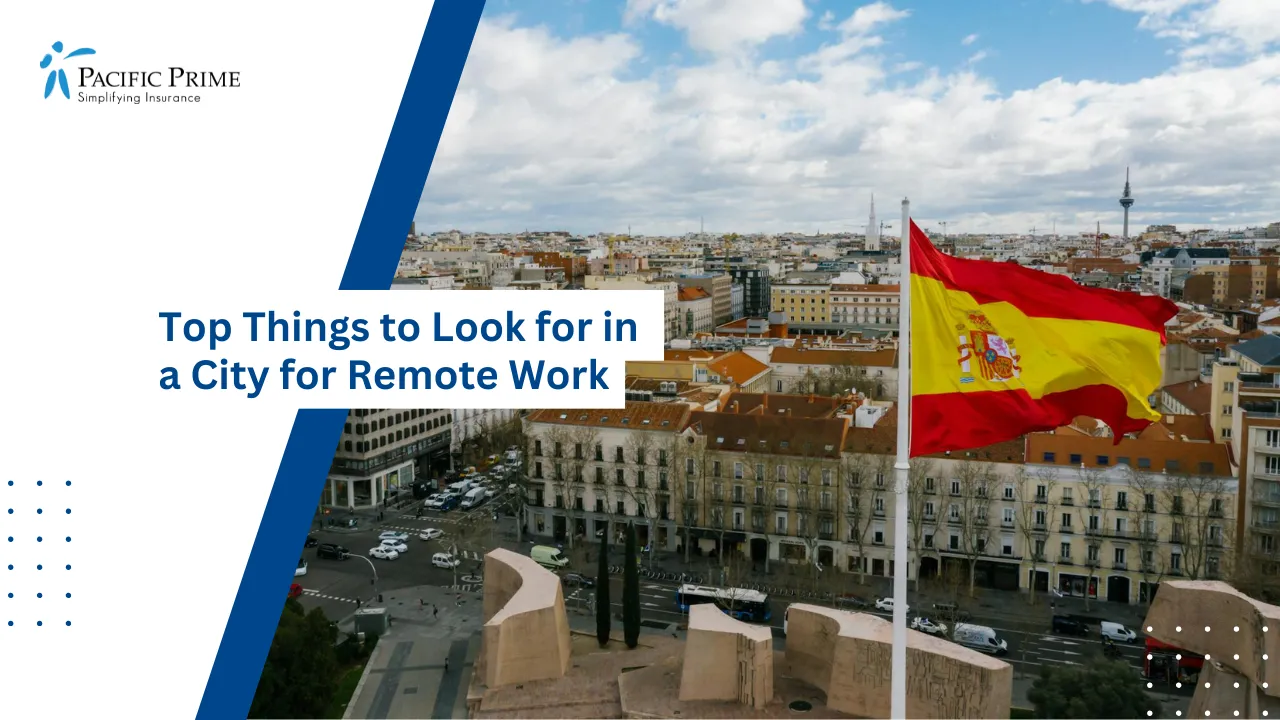
While every remote worker has unique priorities when choosing where to live, there are several common factors to consider, including cost of living, safety, weather, wi-fi, expat community, and English friendliness.
Cost of Living in Spain
Housing, food, utilities, and other expenses can vary significantly depending on the city. Major hubs like Madrid and Barcelona tend to have a higher cost of living than smaller towns. Remote workers should evaluate their budget and choose a location that aligns with their financial comfort.
Safety in Spain
Look into crime rates and the severity of different crimes in the city (e.g., theft, mugging, robbery, vandalism, and homicide). Expats, especially those living alone, should opt for cities known for being safe and where they can comfortably work, live, and explore with peace of mind.
Weather in Spain
Spain has a diverse range of climates due to its varied geography. The northern cities experience a cooler and wetter climate, while the southern and eastern regions face mediterranean climate with hot, dry summers and mild winters.
Wi-Fi in Spain
Internet connection is one of the most important things for remote workers and digital nomads attending virtual meetings and managing cloud-based tools. While Spain generally provides well-covered internet access, some cities, like Madrid, Barcelona, Alicante, and Valencia, offer higher speeds.
Expat Community in Spain
A strong expat or digital nomad community can make it much easier for remote workers to adjust to a new environment. The network of like-minded individuals will help provide support and open up opportunities for socializing and sharing local tips.
English Friendliness in Spain
Non-Spanish speakers may find it challenging to integrate in a Spanish-speaking-only environment. Generally, individuals in tourist areas and larger cities in Spain speak basic English. However, to truly connect with the locals, learning basic Spanish is still highly recommended.
Moving to Spain requires thorough preparation regardless of your nationality; check out our articles Spain Visas for Americans and How to Move to Spain from Latin America.
Where to Move in Spain as a Remote Worker
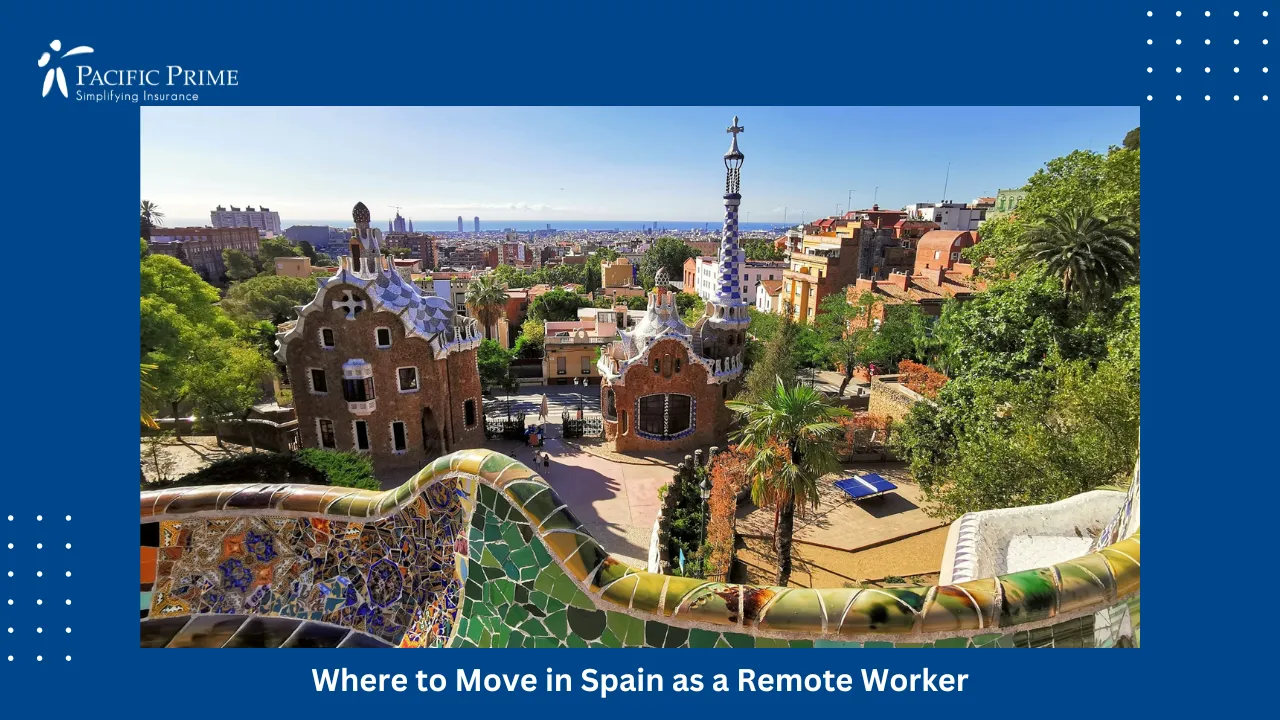
Working remotely in Spain can be incredibly rewarding, and certain cities, such as Barcelona, Madrid, Valencia, and Granada, are especially well-suited to this lifestyle.
Below highlights some of the top Spanish cities for remote workers, outlining their key advantages and important considerations.
Barcelona
Barcelona is ideal for remote workers seeking a balanced mix of vibrant city life, modern infrastructure, and rich local culture. The city buzzes with activities as it becomes a hub for technology and innovation as well as tourism and fashion.
What Makes Barcelona Great for Remote Work
- Thriving international community: Barcelona is home to a large community of multinational digital nomads, providing plenty of opportunities for networking.
- Modern infrastructure and connectivity: The city offers excellent public transport, coworking spaces, and reliable high-speed internet.
- Great weather and beachside: With a stable Mediterranean climate and quick access to beautiful city beaches, you can enjoy a high quality of life year-round.
- Rich culture and local identity: The Catalan region has a rich history, with its own language and culture that are distinct from the rest of Spain. Interestingly, their sense of identity remains strong and blends well with growing globalization.
- Strategic location: The city is well connected to the rest of Europe through its Josep Tarradellas Barcelona-El Prat international airport and high-speed train network.
- English-friendliness: As a major tourist destination and cosmopolitan city, English is widely spoken in central areas in Barcelona.
Things to Consider in Barcelona
- Heavy tourism: Barcelona has long experienced overtourism as a compact-sized city with several million visitors a year. This puts a strain on the city’s infrastructure and residents, especially during high season.
- High cost of living: Barcelona has the highest cost of living in Spain, at around €1,900–€2,200/month. Housing costs are particularly high with an increasingly competitive housing market.
- Risk of street-level theft: Pickpocketing is a major problem in the city center, such as areas like Las Ramblas and El Born. Visitors, expats, and locals alike should be cautious of their belongings when out in public.
Madrid
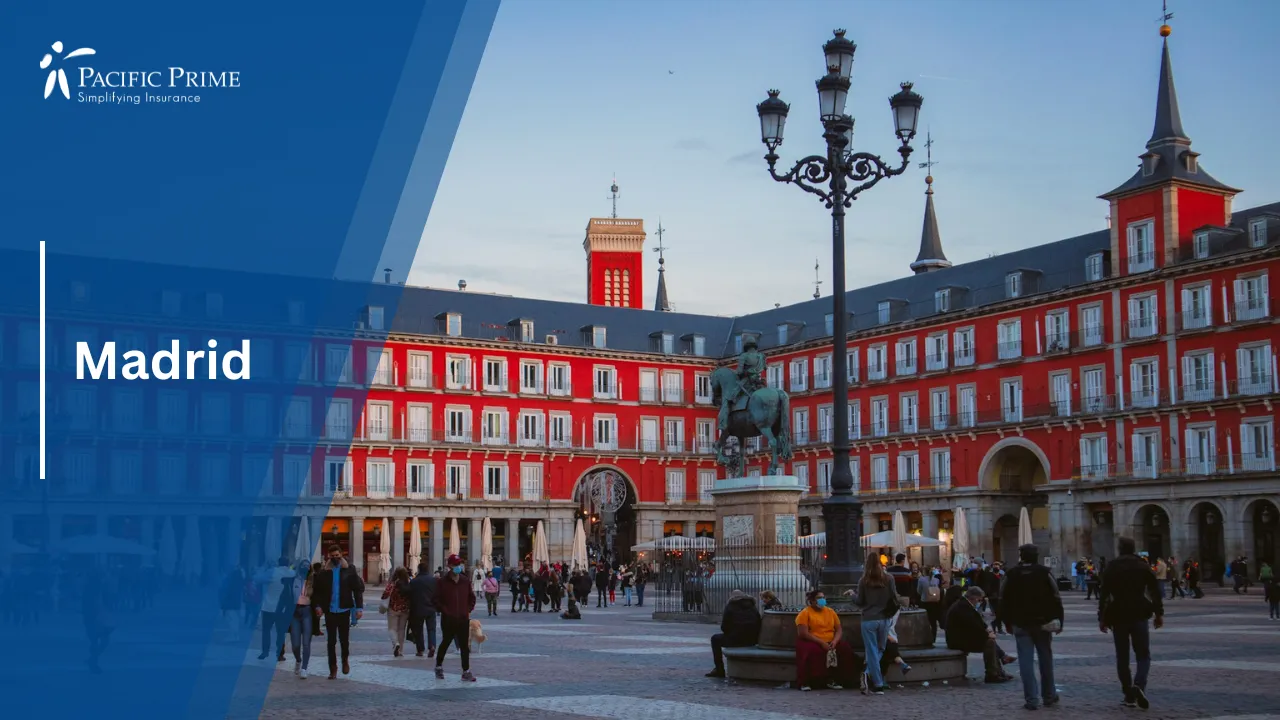
Remote workers who thrive in the heart of the action will likely appreciate Madrid. As the capital city, it offers a vibrant lifestyle, lively nightlife, and a growing expat community, making life in Madrid likely both dynamic and socially rich for those working remotely.
What Makes Madrid Great for Remote Work
- Modern infrastructure and rapid internet: Madrid has one of the best transport networks and the fastest internet in the country. Additionally, the city is walkable with plenty of green public spaces for relaxation.
- International demographic: Foreigners make up almost 15% of Madrid’s population. The expat community itself is constantly renewing and growing.
- Vibrant cultural and social scene: While Madrid is known for its vibrant nightlife, its cultural scene is also packed with high-quality museums, including the Prado and Reina Sofia.
- Convenient location: The city is located in the center of Spain, making it easy to travel to other regions. Meanwhile, it is only a two- to three-hour flight away from other major cities around Europe.
- Low violent crimes: Madrid is considered one of the safest cities in Europe with very low violent crime rates. Pedestrians can feel secure if they remain alert to their surroundings.
- English-friendliness: Madrid has the largest and most active English-speaking expat community, with many business opportunities for English speakers. Compared to Barcelona, English is more commonly used in professional and social settings.
Things to Consider in Madrid
- No beach access: Madrid is landlocked, with the nearest coastline being about two hours away in Valencia via high-speed train. If you enjoy regular beach days, a seaside city may be a better fit.
- High cost of living: Like Barcelona, Madrid has a relatively high cost of living compared to other Spanish cities. For a comfortable lifestyle in the city center, including rent, expect to spend around €1,900–€2,200 per month.
- Bustling big-city atmosphere: Madrid is one of Europe’s largest and liveliest cities. The streets are vibrant and busy from day to night, which can be exciting but may feel overwhelming for those seeking a quieter, more laid-back environment.
Valencia
Valencia stands out as a top choice for many remote workers, offering a well-balanced mix of affordability, safety, and culture. As a coastal city, it provides a laid-back seaside atmosphere while also boasting modern infrastructure as the third-largest city in Spain.
What Makes Valencia Great for Remote Work
- Mediterranean climate: Valencia benefits from a mild climate, with 300 days of sunshine year-round along the beautiful beaches. Here, expats can maintain a healthy work-life balance, with plenty of outdoor activities to enjoy.
- Reliable high-speed internet: With extensive fiber-optic coverage as the standard in the urban center, remote workers can rest assured that they will have access to high-speed internet while living in Valencia.
- Accessible transport and cycling network: Valencia has a well-connected network of metro, tram, and bus, covering most of the urban area and its surroundings. Thanks to its flat terrain, the city is also bike-friendly, with extensive bike lanes and a public bike-sharing system.
- Rich culture and social life: The city offers a vibrant cultural scene, historic architecture, various events, museums, and festivals. As the birthplace of paella, Valencia is also known for its excellent cuisine.
- Large expat community: In 2022 and 2024, the city was ranked first for the best expat city. For this reason, many were drawn to the city, leading to a thriving expat community scattered in several neighborhoods, including Ruzafa, El Carmen, and Cabanyal.
Things to Consider in Valencia
- Flood risks: Valencia has a long history of recurring floods. In 2024, the city experienced the country’s deadliest natural disaster in decades, causing property damage and the loss of more than 200 lives.
- Water scarcity: The region suffers from a persistent water shortage problem due to its climate conditions. This not only affects the agricultural sector but also the urban residents, as they occasionally face imposed water restrictions.
Seville
Remote workers who delight in warm climate, rich culture, and historical scenes, coupled with an affordable cost of living, will easily adapt to life in Seville. As the capital of Andalusia, it boasts the region’s largest economy and serves as the heart of a growing metropolitan area.
What Makes Seville Great for Remote Work
- Rich cultural heritage: Seville has a long history of influences from both the Romans and Islamic rule, shaping the city’s architecture, traditions, and daily routines. These rich cultural layers offer remote workers and expats opportunities to immerse themselves in the Andalusian way of life.
- Affordable cost of living: The cost of living in Seville is much cheaper than in other northern cities. Excluding rents, it costs only €700 per month to live comfortably in Seville.
- Well-connected transport network: While the city is walkable, Seville also boasts a modernized transportation system consisting of bus, tram, and metro. For travel between other Spanish cities and major European cities, high-speed trains and international airports are available.
- Simple, relaxed lifestyle: Seville is known for its laid-back way of life and generally pleasant weather: residents in Seville often spend time outside in cafes, restaurants, or the city’s scenic parks. Remote workers who value downtime and a slower rhythm will likely feel at ease here.
Things to Consider in Seville
- Intense summer heat: During summer months, the temperature in Seville averages 36ºC and can easily rise to over 40ºC. As the heat gets unbearable, many locals need to escape the city to the coastlines.
- Slow bureaucracy: Government offices can be slow and inefficient, resulting in frequent delays of paperwork. This could impact remote workers who are trying to complete or renew their residency status.
Granada

Granada is an ideal choice for remote workers seeking affordable living in a city rich in history and culture. Home to the Alhambra, a UNESCO World Heritage Site, and one of Spain’s top universities, Granada attracts a diverse crowd, including international tourists and exchange students.
What Makes Granada Great for Remote Work
- Scenic landscape: With its Moorish heritage reflected in the architecture and the stunning Sierra Nevada mountains as a backdrop, strolling through Granada is a truly unique and enjoyable experience.
- Affordable cost of living: Granada is notably budget-friendly compared to other Spanish cities, with lower rent and daily expenses. Living comfortably in Granada can cost around €720 per month, not including rent.
- Work-life balance: Without the big city’s chaos, life in Granada leaves more room after work to enjoy local culture and social life. Additionally, its Mediterranean climate and easy access to both the mountains and the beach encourage outdoor activities and a healthy lifestyle.
- Growing expat community: Granada has a growing expat and digital nomad community, making it easy to connect with like-minded people. There are language exchange meetups and coworking events to help newcomers adapt and build their social network.
Things to Consider in Granada
- Lack of a local airport: The closest international airport is 1.30 hours away in Malaga. For frequent travelers, this adds up to the time and money spent on a trip.
- Traditional midday break: The two to five pm afternoon break, known as siesta, is still commonly practiced in Granada. Many stores and restaurants are closed during that time and reopen in the evening.
- Slow bureaucracy: Appointments with the government offices are often limited, and the process can be slow and inefficient. Without help, expats and remote workers may need to sacrifice several days to complete their paperwork.
Bilbao
As the largest city in the Basque Country, Bilbao welcomes remote workers eager to experience Basque culture, which is distinct from traditional Spanish culture, in a cooler climate. The city offers a unique blend of modern amenities and rich artistic heritage.
What Makes Bilbao Great for Remote Work
- High quality of life: Bilbao is surrounded by lush green landscapes, with scenic coastlines just a short drive away. Its urban setting is also a perfect blend of medieval and contemporary architecture and attractions, offering plenty of leisure activities for remote workers in downtime.
- Unique Basque culture experience: The Basque culture has its completely distinct language (Euskera), customs, music, and cuisine. Remote workers can immerse themselves in the unique, vibrant culture while staying in Bilbao.
- Start-up environment: Bilbao has rapidly emerged as a dynamic startup hub, with frequent networking events being held in the city. This opens up opportunities for remote workers to expand their network of collaboration, mentorship, and investment.
- Easy transport and walkable city: While Bilbao has a highly efficient network of transportation, you can also get around by walking, thanks to its compact size.
- Cooler climate: Unlike the south of Spain, Bilbao offers a humid oceanic climate where the temperature rarely exceeds 26°C during the summer. This opens up an option for expats who find it unbearable under the southern heat.
Things to Consider in Bilbao
- Rainy weather: Bilbao has an annual precipitation rate of 1,200 mm, meaning the city faces frequent rain throughout the year, especially from October to February. However, the rain comes in light drizzles rather than heavy storms.
- Language barrier: It is recommended that remote workers learn some basic Spanish and Basque to get around easier in Bilbao. While younger people may speak English, pronunciations may be unclear.
Las Palmas de Gran Canaria
Gran Canaria, or the Canary islands, is widely recognized as one of Europe’s top destinations for remote work, thanks to a unique blend of climate, infrastructure, and affordability.
Las Palmas, in particular, stands out as the top choice for remote workers, with the highest concentration of coworking spaces and cafes on the island. While the sunnier southern part tends to attract more tourists, Las Palmas offers a more authentic local atmosphere.
What Makes Las Palmas Great for Remote Work
- Vibrant remote work community: Las Palmas and the Canary Islands have a growing community of expats holding frequent meetups and events. This kind of network makes the newcomers feel welcomed and adjust better to life on the island.
- Urban beach lifestyle: Playa de Canteras, a city beach in Las Palmas, is one of the most beautiful and biggest beaches with plenty of activities like surfing and sunbathing for remote workers to enjoy and relax.
- Year-round great weather: Often referred to as “the eternal spring,” the island has a mild subtropical climate with roughly 320 sunny days and a year-round average temperature of 22°C to 26°C.
- Affordable cost of living: The cost of living in Las Palmas is considered affordable compared to other major cities. Excluding rent, monthly expenses in Las Palmas are 15%–18% cheaper than in Barcelona and Madrid.
Things to Consider in Las Palmas
- Flight-dependent location: As an island near the Moroccan coast, residents of Las Palmas and the Canary Islands have limited access to and from mainland Spain, having to rely on flying. While a ferry from the mainland is available, the journey takes one to two-and-a-half days.
- Average-speed internet: While Las Palmas offers widespread access to fiber-optic internet, its average download speed is slightly below the national average. This may be a concern for remote workers whose jobs require large file transfers, video conferencing, or high-bandwidth applications.
Secure Your Insurance Plan with Pacific Prime
Relocating abroad—especially to Spain—can be both exciting and overwhelming, with plenty of things to consider. For digital nomads, one key requirement is having comprehensive health insurance that offers adequate coverage throughout your stay.
Are you unsure about which insurance plan is right for you? With 25 years of experience, Pacific Prime works with top insurance companies in Spain to help expats, digital nomads, and remote workers make informed decisions and choose a plan that best suits your budget and needs.
This will ensure your life abroad in Spain is protected with access to high-quality healthcare, no matter which city you choose.
Contact us today for a FREE consultation service and a plan comparison.
Frequently Asked Questions
Do I need a visa to work remotely in Spain?
You’ll need a visa to live and work in Spain unless you’re an EU citizen. Spain offers a digital nomad visa that allows non-EU nationals to live and work remotely in the country. Requirements include proof of income, health insurance, and a clean criminal record.
What are the best cities in Spain for digital nomads?
Top cities include Barcelona, Madrid, Valencia, Seville, and Granada. Each offers a unique mix of culture, cost, connectivity, and lifestyle. The Canary Islands, like Las Palmas and Tenerife, are also popular for their beaches and year-round mild weather.
Is the internet reliable in Spain for remote workers?
Most cities in Spain generally have reliable high-speed internet, especially in urban areas. However, speeds can vary in smaller towns or islands. Cities like Madrid, Valencia, and Barcelona have strong digital infrastructure.
- Thailand Digital Nomad Visa 2025: How to Apply – October 20, 2025
- Top Health Insurance in Thailand for Spanish Expats: Options and Benefits – October 20, 2025
- Arab Orient Insurance and GIG Health Insurance for Expats in Dubai – October 15, 2025



Comments