300x85-png.webp)


 Hong Kong
 Singapore
 China
China Dubai
Dubai Thailand
 United Kingdom
 Mexico
Having health insurance in Dubai as an Indian expat is a legal requirement. The Dubai Health Authority (DHA) mandates that all residents must have valid health insurance. Indian expats in Dubai know they can rely on top providers AXA, Bupa, and Allianz for international plans that include India.
Discover the world’s top
health insurers.
Compare quotes with
a click of the button.
Are you an Indian citizen living or working in Dubai for an extended period of time? Do you need help finding the right health insurance plan for the duration of your UAE residency?
This guide will help you learn all you need to know about the health insurance law in Dubai for residents, what options expats like you have, how much insurance typically costs, and much more.
After you’ve finished this article, you’ll want to check out the top health insurance options for expats in Dubai and learn how Dubai’s healthcare system works.
Health Insurance is Mandatory in Dubai for Indian Expats
Dubai Health Insurance Law No. 11 of 2013 requires every resident, including Indian expats, to be covered by health insurance. Employers are responsible for providing coverage to their employees, while dependents such as spouses, children, and parents must be covered separately.
Those who remain uninsured can face fines and difficulties renewing visas, so it is essential to secure proper coverage.
Indian expats should verify that any medical insurance plan they purchase meets these following requirements:
- An annual upper aggregate claims limit of at least AED 150,000 (about USD $40,800)
- Emergency medical treatment
- Inpatient care
- Outpatient care
- Maternity services, including inpatient, outpatient, and newborn care
Go to Appendix A on page 11 of the Dubai Health Authority’s brochure Employer’s Information Pack to see the full details of the mandatory medical insurance in Dubai.
Consequences for Indian Expats Without Coverage in Dubai
Indian expats who reside in Dubai but are not insured in compliance with Dubai’s health insurance law may suffer the following consequences:
- Financial fines
- Legal complications
- Visa renewal issues
- Limited medical care access
- Higher medical costs
- Negative impact on dependents: fines and poor healthcare
- Employer penalties
- Damaged reputation
- Deportation
Don’t find out what happens when you break the health insurance law in Dubai by securing proper health insurance coverage before you travel.
Health Insurance Options for Indian Expats
Indian expats have five insurance options in Dubai. Employer-provided plans and individual/family plans are the most common. Low-cost options, essential/basic plans, can be provided by the government or insurers. Expats typically seek global coverage available with international expat plans.
If employer-provided plans or any basic policy doesn’t include quite enough coverage, a final option for Indian expats is to secure a top-up plan or add a rider to their plan to complement their existing coverage.
Employer-Provided Plans in Dubai (Group Insurance)
Employers often provide employees with group insurance as part of the compensation package. This coverage can be basic (meets local minimums) or enhanced (additional benefits) for Indian expats.
Who it suits: Employees whose employer includes a plan and who need straightforward, low-effort coverage.
These are the typical features of this plan type:
- Basic inpatient and outpatient cover (varies widely)
- Network hospitals selected by insurer/employer
- Premium wholly or partly paid by employer
- Usually not portable if you change employers (depends on policy)
Here are some advantages of this plan type:
- Low/no premium outlay for employees
- Easy enrollment
- DHA compliance (usually)
Here are some disadvantages of this plan type:
- May not cover dependents, maternity, international travel, or preferred doctors
- Limited customization
- Potential gaps for family needs
Individual/Family Plans in Dubai (Retail Plans)
Individual/family plans are policies bought directly by individuals for themselves and family members. These are available from local and international insurers.
Who it suits: Expats who need broader coverage than employer plans, families, people with maternity needs, or those wanting international cover, including in India.
These are the typical features of this plan type:
- Customizable sum insured and benefits (inpatient/outpatient, dental, maternity)
- Choice of hospital network (wider with international insurers)
- Option for international or India-inclusive travel/cover
Here are some advantages of this plan type:
- Full control over benefits
- Can add dependents and riders
- Portable across employers if paid personally
Here are some disadvantages of this plan type:
- Higher premiums
- Underwriting for age/pre-existing conditions
Essential/Basic Plans in Dubai (Low-Cost Options)
Expats in Dubai from India who want a low-cost option may choose a government or market-driven basic package that is intended to meet minimum legal requirements for lower-wage workers. These are often referred to in the market as essential benefits plans.
Who it suits: Low-income workers, temporary workers, or those on tight budgets who only need legal-minimum coverage.
These are the typical features of this plan type:
- Limited hospital and outpatient coverage
- Lower annual sum insured and limited network
Here are some advantages of this plan type:
- Affordable
- Meets minimum compliance
Here are some disadvantages of this plan type:
- Significant coverage limits
- Not suitable for families, maternity, or major health events
International Expat Plans in Dubai (Global Coverage)
International health insurance plans are the most popular option for Indian expats living in Dubai. These policies are designed for globally mobile people. They can include treatment in multiple countries (such as UAE, India, and other countries), and they are usually provided by global insurers.
Who it suits: Frequent travelers to India, digital nomads, executives, families wanting treatment in India.
These are the typical features of this plan type:
- Multi-country coverage
- Higher sum insured options
- Option for direct billing at international hospitals
- Concierge services
- Evacuation/repatriation options
Here are some advantages of this plan type:
- Broad network
- Peace of mind when traveling home to India
Here are some disadvantages of this plan type:
- Most expensive
- May have geographic limits and country-specific exclusions
Top-Ups and Riders in Dubai (Complementary Coverage)
Indian expats who want to complement any of the existing plan types above can get an add-on plan called a top-up plan or rider. These are added to an existing employer or basic policy to extend your benefits.
Who it suits: People with employer plans that are too basic or families who want specific extra benefits.
These are the typical features of this plan type:
- Higher annual plan limit
- Maternity rider
- Dental rider
- International coverage rider
- Critical illness rider
Here are some advantages of this plan type:
- Targeted increase in protection without switching base plan
Here are some disadvantages of this plan type:
- Additional premium
- Rider rules/waiting periods apply
The Cost of Health Insurance in Dubai
The cost of international health insurance in Dubai for individual Indian expats averaged USD $5,896 annually in 2024. The average family premium was USD $17,670. Insurance costs vary based on age, medical history, and level of coverage.
These averages come from Pacific Prime’s 2024 annual report on the cost of international health insurance.
Indian expats who are interested in health insurance plans that are not international expat plans will want to consider these annual averages for the cost of the other types of health insurance in Dubai:
- Basic Coverage: AED 600–1,200 (about USD $163–$326)
- Comprehensive Individual Plans: AED 5,000–10,000 (about USD $1,360–$2,720)
- Family Plans: AED 15,000+ (about USD $4,000+)
Indian workers and families should budget according to their healthcare needs, especially if maternity or specialist care is required.
Leading Health Insurance Providers for Indian Expats
AXA, Bupa, Allianz, Daman, and Cigna are the leading health insurance providers who offer the best plans for Indian expats residing in Dubai, UAE. Each offers private, international health coverage with customizable plans aimed at the unique needs of global citizens and digital nomads.
AXA
AXA Global has a strong presence in Dubai through AXA Gulf (now part of GIG Gulf) and its partnership with Daman. These plans are designed to combine global standards with compliance to UAE’s regulatory requirements. AXA appeals to expats who want strong local service and international flexibility.
AXA Key Features:
- Access to ~1.9 million providers worldwide and ~3,000 providers in UAE
- Optional upgrades for maternity, dental, optical, and other add-ons
- Strong domestic network
- Internationally recognized partners
- Virtual care and online services (telemedicine, online claim or provider lookup)
- Licensed and compliant with local/regional health insurance laws
Bupa
Bupa is a well-known global health insurer with strong operations in the Middle East. Its plans are often seen by expats as premium options because of the breadth of hospital networks, reputation for overseas/hospital-network quality, and extra features.
For Indian expats who are balancing cost vs coverage, Bupa’s global presence and terms often tend to offer peace of mind.
Bupa Key Features:
- Large provider network that includes many premium hospitals in the UAE under direct billing
- Wellness, maternity, and psychiatric support is included (or as add-ons) in many plans
- Includes digital processes with online claims, apps, and faster approvals
- Flexible plan options that make balancing between basic DHA-compliant plans and more comprehensive international-benefit plans easy
- Cashless or direct billing at many high-end hospitals in Dubai helps reduce hassle
Allianz
Allianz is another global insurer with strong presence in the Dubai expat health insurance market. They offer highly customizable health insurance plans for individuals and families, including DHA-compliant plans, and international/private medical insurance plans.
Their Dubai Healthcare Plan offers very high benefit limits and a wide choice of enhancements.
Allianz Key Features:
- Various plan tiers, from Gold and Silver down to more standard offerings
- Very high benefit limits (in some plans up to USD millions) including inpatient, outpatient, and optional add-ons
- Supplementary benefits like dental, repatriation, maternity enhancements, and more
- Cashless claims in network hospitals
- Streamlined customer support
Daman
Daman is the UAE’s leading dedicated health insurer. They are a large-scale, well-established, government-backed (Abu Dhabi-level) provider known for their wide domestic network, strong digital tools, and disease management programs. For Indian expats, Daman offers a reliable home base provider.
Daman offers good access to hospitals and clinics, plus increasingly global features through partnerships.
Daman Key Features:
- Over 3,000 healthcare providers in the UAE
- Digital services for mobile app, virtual care, telemedicine, claim support, and provider lookup
- Optional add-ons for maternity, optical, dental, and more
- Very high annual global limits in some plans
- Strong outpatient/inpatient coverage
Cigna
Cigna offers flexible international individual/family health insurance plans in the Middle East. Their HealthGuard product is aimed at expats. It combines local hospital networks, 24/7 support, international coverage, and flexibility in choosing plan levels.
Cigna has a good reputation among expat communities for responsive customer service and comprehensive cover.
Cigna Key Features:
- Cigna HealthGuard is designed for expats with customizable coverage for individuals/families
- Access to trusted networks of hospitals, clinics, and doctors in UAE
- 24/7 customer care
- Options to adjust plan benefits to match lifestyle and needs
Coverage that Matters for Indian Expats
The coverage benefits for alternative/traditional medicine, specialist consultations, maternity and newborn care, and children’s vaccinations may not be included with Dubai insurance.
For that reason, Indian expats should pay particular attention to the following benefits and if they are offered.
Alternative / Traditional Medicine Benefits
Some expats may prefer or use traditional Indian or Ayurvedic treatments in addition to modern medicine. Policies that allow or partially reimburse licensed alternative/traditional therapies may appeal to Indian expats. Many standard plans won’t include these, so expats will need to verify coverage.
Outpatient Treatment and Specialist Consultations
For chronic conditions or routine health issues, outpatient care (GP, specialist, imaging, labs, prescription drugs) matters a lot. Indian expats often prefer frequent checkups, diagnostic tests, and good pharmaceuticals. Basic plans often lack strong outpatient benefits.
Maternity and Newborn Care
Many maternity benefits have waiting periods of 12–18 months (or more). For those planning pregnancy soon after moving or renewing, this is important to check. Also, some insurers need prior approval for certain treatments.
Coverage for Pre-Existing Conditions
Indians have a relatively high prevalence of chronic diseases (like diabetes, hypertension, heart disease). As such, Indian expats often already have conditions when moving. Having a plan that recognizes, covers with waiting periods, or has premium loadings for pre-existing conditions is vital.
Emergency Services
In case of serious illness or accidents, quick access to good emergency treatment can be life-saving, especially given heat, traffic, and occupational hazards. Plans should clearly include emergency ambulance and trauma care.
Wide Network of Hospitals and Languages Available
Indian expats will want to note how wide their insurance providers’ network is so they can find a hospital close by that offers services in their native language. Going to hospitals where doctors speak Hindi/Tamil/Malayalam helps communication, especially in stressful medical situations.
Also proximity to home and work reduces cost/time.
Children’s Vaccinations and Pediatric Coverage
For Indian expat families with kids, coverage for diagnostic care, childhood vaccines, pediatric specialist visits, and admission costs is very important. Raising kids abroad means these costs add up.
Steps for Expats to Apply for Health Insurance in Dubai
To apply for health insurance in Dubai, Indian expats should follow these steps:
- Prepare documents such as passport, Emirates ID, and visa
- Provide medical history if required
- Apply through your employer, directly with insurers, or via brokers
- Compare plans online before finalizing
Having proper documentation speeds up approval and ensures accurate coverage. Read more about the process here.
Tips for Choosing the Right Health Insurance Plan
Checking for India coverage, balancing premiums with out-of-pocket costs, and prioritizing pre-existing condition coverage are among our top tips for Indian expats when choosing the right health insurance plan for their stay in Dubai. Keep reading for all the tips.
- Prioritize Pre-Existing Condition Coverage: Many Indian expats have conditions like diabetes, hypertension, or heart disease. Look for plans that cover pre-existing conditions after a waiting period or with manageable premiums so you’re not left paying out of pocket.
- Check for India Coverage or International Add-ons: If you frequently travel to India, choose a plan with international coverage that includes treatment there. Some insurers even partner with Indian hospitals, which can save money and provide peace of mind when visiting family.
- Review Maternity and Family Benefits Early: For young families, maternity cover is critical. Plans often have waiting periods (12–18 months), so buy coverage well before planning pregnancy. Also, make sure newborn care, children’s vaccinations, and pediatric visits are included.
- Compare Hospital Networks with Indian Specialists: Many Indian expats prefer doctors who speak their language (Hindi, Tamil, Malayalam, etc.). Check if your insurer’s network includes clinics and hospitals with Indian specialists, which makes communication and cultural comfort easier.
- Balance Premiums and Out-of-Pocket Costs: Don’t just look at the annual premium. Compare copays, deductibles, and coinsurance. A cheaper plan may end up costing more if you need regular outpatient visits or medications, which many expats underestimate.
- Evaluate Outpatient and Preventive Coverage: Routine checkups, diagnostics, and prescriptions are frequently used by expats. Make sure outpatient care is included, not just hospital stays. Preventive screenings and wellness benefits can also help manage long-term health.
- Choose an Insurer with Smooth Claims and Good Support: Ask other Indian expats or read reviews about how quickly claims are processed. A responsive insurer that handles cashless claims at major hospitals can save you stress during emergencies.
Frequently Asked Questions
Can Indians buy health insurance in Dubai?
Indian expats can buy health insurance directly from licensed insurers or through brokers in Dubai. It’s mandatory for all residents, including Indian nationals, to have valid coverage. Pacific Prime is a trustworthy, experienced broker who can help you find what you need.
How much is health insurance in Dubai for Indian expats?
Basic health insurance plans in Dubai for Indian expats start at around AED 600 per year (about USD $160), while comprehensive coverage can range from AED 5,000 to 10,000 (about USD $1,300–$2,700) annually. Family plans are higher, depending on age, benefits, and pre-existing conditions.
Does Dubai health insurance cover treatment in India?
Some Dubai international health insurance policies include coverage in India, but not all. Expats should confirm if India is included in the insurer’s global network before purchasing a plan.
Is employer health insurance enough for Indian expats?
Employer-provided health insurance in Dubai usually meets minimum DHA requirements but may not offer sufficient coverage for Indian expat dependents, maternity care, or international treatment. Many expats buy top-up or family plans from international providers to make up the difference.
Can Indian health insurance be used in Dubai?
Most Indian health insurance policies do not provide direct coverage in Dubai hospitals. Expats must have a DHA-compliant plan in Dubai, but some international Indian insurers offer add-ons for UAE care.
Conclusion
For Indian expats in Dubai, health insurance is both a legal necessity and a safeguard against unexpected medical expenses. With a wide range of providers and plans available, it’s essential to compare options and select coverage that meets your needs and budget.
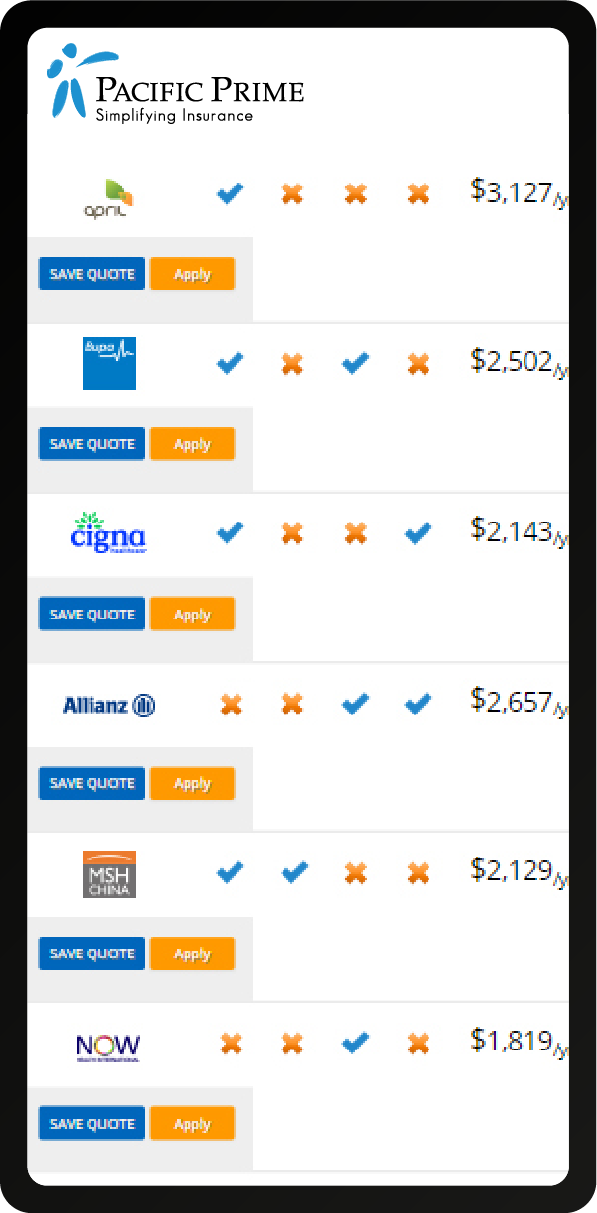
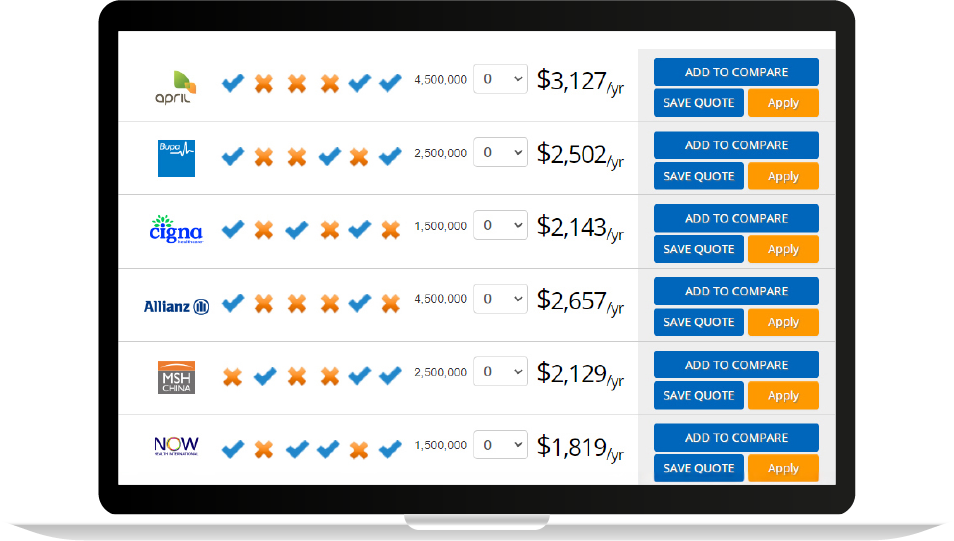
Now that you’re ready to pick a plan, you’ll want to check out our free, online insurance plan comparison tool that has over 50,000 plans saved in our database.
With it, you can compare multiple plans side by side, save your favorite plans for later reference, and get real quote estimates for plans according to your personal information and travel itinerary. Get started today!
If you’d rather speak to a Dubai insurance expert, contact our team online or over the phone at 1-800-868-1451.
Be sure to read our posts Family Visa Sponsorship in Dubai: Health Insurance Rules and Costs and Health Insurance for Filipinos in Dubai as well.
Safe travels!

Serena earned her Bachelor’s Degree in Psychology from the University of British Columbia, Canada. As such, she is an avid advocate of mental health and is fascinated by all things psychology (especially if it’s cognitive psychology!).
Her previous work experience includes teaching toddlers to read, writing for a travel/wellness online magazine, and then a business news blog. These combined experiences give her the skills and insights she needs to explain complex ideas in a succinct way. Being the daughter of an immigrant and a traveler herself, she is passionate about educating expats and digital nomads on travel and international health insurance.
- How to Compare Travel Insurance Plans the Smart Way – October 21, 2025
- Best Hospitals in the UAE: Top Picks in Dubai and Abu Dhabi – October 21, 2025
- How Much is a Doctor Visit in Dubai Without Insurance? – October 21, 2025



Comments