300x85-png.webp)


 Hong Kong
 Singapore
 China
China Dubai
Dubai Thailand
 United Kingdom
 Mexico
To apply for Thailand’s digital nomad visa, formally known as the Destination Thailand Visa (DTV), applicants must follow several key steps: confirm their eligibility, prepare documents, submit the application online or at a local Thai embassy, obtain the visa, and enter Thailand with confidence.
Discover the world’s top
health insurers.
Compare quotes with
a click of the button.
In response to the growing remote work trend, Thailand welcomes digital nomads and expats with the DTV visa, offering access to affordable living, stunning beaches, and vibrant culture.
In this Pacific Prime article, we explain everything you need to know about Thailand’s digital nomad visa, from eligibility criteria and required documents to step-by-step application instructions. We also highlight the importance of comprehensive health insurance for expats living in Thailand.
Quick Overview of Thailand’s Digital Nomad Visa
Before exploring the details, here’s a brief overview of Thailand’s digital nomad visa to get you started.
| Category | Details |
| Visa Name | Destination Thailand Visa (DTV) |
| Validity | 5 years, multiple entry |
| Eligibility | Over 20 years old; remote employee, freelancer, or self-employed entrepreneur with a foreign company/business |
| Minimum Asset Requirements | THB 500,000 (USD 15,340) |
| Application Process | Submit at Thai embassy/consulate or online via official e-visa platform |
| Work/Activity Restrictions | Cannot work for a Thai company or engage in business with local Thai clients |
| Special Benefits | Dependents allowed |
Understanding Thailand’s Digital Nomad Visa
In July 2024, Thailand launched the Destination Thailand Visa (DTV) to welcome foreigners who want to stay in the country for an extended period. It’s designed for location-independent professionals, offering a flexible and convenient way to live and work in Thailand legally.
Since its launch, the visa has drawn interest from expats and digital nomads from around the world. With the DTV, professionals can enjoy an extended stay and take full advantage of the country’s cultural richness and modern lifestyle.
Benefits of Thailand’s Digital Nomad Visa
The Digital Nomad Visa (DTV) not only grants a legal extended stay in Thailand but also offers several key benefits:
1. Legal stay without becoming an automatic tax obligation
Because the DTV is categorized as a tourist visa, holders do not automatically become Thai tax residents and don’t need to pay Thai taxes on their foreign income simply for holding the visa.
However, under Thai law, those staying in Thailand for more than 180 days in a year are considered tax residents. If you meet this threshold, you may still be liable for taxes on foreign income brought to Thailand.
2. Family inclusion
The DTV allows the main visa holder to apply for extensions for their direct family members, including a legal spouse and children under the age of 20 without a number limit. Family members must provide official documentation proving their relationship with the main visa holder to qualify.
3. Extendable stays
The DTV is a multiple-entry visa valid for five years, allowing stays of up to 180 days per entry. Each stay can be extended once per calendar year for an additional 180 days by submitting an in-person request at a Thai immigration office and paying a fee of THB 1,900 (USD $58).
This means visa holders can remain in Thailand for nearly a full year continuously using the extension option.
Who Can Apply for Thailand’s Digital Nomad Visa?
Digital nomads, remote workers, freelancers, and those participating in Thai soft power activities can apply for the DTV visa.
Other eligibility criteria include:
- Nationality: Citizens of all foreign nationalities are eligible to apply.
- Age: Applicants must be at least 20 years old.
- Financial requirements: Applicants must show proof of at least THB 500,000 (USD 15,340) in savings or income through official bank statements or payslips. Sponsorship by a qualifying individual is also accepted.
- Immigration record: Applicants must not have a history of long visa overstays with Thai Immigration.
- Purpose of visit:
- Workcation: Employees and business owners of companies based outside Thailand, as well as freelancers, may apply for the DTV.
- Thai soft power activities: Individuals participating long-term in activities such as Muay Thai training, Thai cooking classes, sports training, medical treatment, seminars, or music festivals are also eligible.
Visa Fees for Thailand’s Digital Nomad Visa
The application fee for the Destination Thailand Visa (DTV) ranges from USD $275 to $1,150, depending on the applicant’s country of residence and the local Thai embassy or consulate handling the application.
The table below outlines the DTV visa fees in several common application locations, including the United States, the United Kingdom, Australia, the United Arab Emirates, Taiwan, Vietnam, and Indonesia.
| Countries | Fees |
| United States | USD 400 |
| United Kingdom | GBP 300 |
| Australia | AUD 600 |
| UAE | AED 1,500 |
| Taiwan | TWD 11,000 |
| Vietnam | USD 340 |
| Indonesia | IDR 5,600,000 |
Required Documents for Thailand Digital Nomad Visa
The documents required for the Destination Thailand Visa (DTV) vary depending on your purpose of visit. Although there are no strict guidelines for preparing these documents, some may necessitate legalization or authentication.
With that said, it’s best to confirm the specific requirements with the Thai embassy or consulate where you plan to apply.
For Workcation/Digital Nomad/Freelancer Applicants
If you are applying for the DTV visa as a digital nomad or a freelancer working for non-Thai entities abroad, follow this checklist to prepare the required documents.
- Passport biodata page or travel document valid for at least 6 months from the date of travel
- Passport-sized photograph (taken within the last 6 months)
- Proof of current residence/where you live now (e.g. residence permit, passport stamp, etc.)
- Proof of visa fee payment (prices vary depending on the consulate)
- Bank statement / savings or checking account statement showing a minimum ending balance of THB 500,000, over the past ~3 months
- For employees and freelancers: employment contract or employment certificate in their country or professional portfolio showcasing digital nomad, remote worker, foreign talent or freelancer status
- For business owners: a certificate of incorporation, corporate tax return, and a cover letter
For Thai Soft-Power Activities Applicants
If applying under soft power-related activities (e.g., Muay Thai training, cooking classes, medical treatment, seminars, etc.), you’ll need:
- Passport biodata page or travel document valid for at least 6 months from the date of travel
- Passport-sized photograph (taken within the last 6 months)
- Proof of current residence/where you live now (e.g. residence permit, passport stamp, etc.)
- Proof of visa fee payment (prices vary depending on the consulate)
- Bank statement / savings or checking account statement showing a minimum ending balance of THB 500,000, over the past ~3 months
- Letter of acceptance or appointment from the institution or organisation overseeing the activity (e.g. cooking school, medical centre, seminar organiser)
For Spouses & Children (Under 20) of DTV Visa Holders
Dependents accompanying the main visa holder will generally need:
- Passport biodata page or travel document valid for at least 6 months from the date of travel
- Passport-sized photograph (taken within the last 6 months)
- Bank statement / savings or checking account statement showing a minimum ending balance of THB 500,000, over the past ~3 months (For a family bank statement, include proof of relationship such as a birth or marriage certificate)
- DTV visa of the DTV holder
- Proof of relationship to the DTV visa holder (e.g., a copy of a marriage certificate/ birth certificate/ certificate of adoption)
- For applicants under 20 years of age:
-
- Copy of a birth certificate
- Copy of parents’ marriage certificate
- A notarised copy of the court order must be provided in case of sole custody
- Copy of passports or ID of mother and father or legal guardians
- Original notarised consent letter for minors travelling abroad, signed by both parents or legal guardians if the applicant is travelling alone
Step-by-Step Guide to Applying for the Thailand Digital Nomad Visa
Applying for the DTV visa isn’t complicated but may require careful planning. Applicants may follow these simple steps to ensure their visa approval and timely travel.
Step 1: Check Eligibility and Gather Documents
Review the eligibility criteria and document requirements outlined above to confirm you qualify for the DTV. Begin collecting the necessary documents 3–4 months before your planned travel date to ensure you have everything ready for the application.
Step 2: Apply Online or In Person at Your Local Thai Embassy
Submit your visa application through the official e-visa platform or at your local Thai embassy/consulate.
For online application, simply visit Thailand’s official e-visa portal, create an account, and upload all required documents in the correct format. Double-check your information, and pay the applicable visa fee online. This method is convenient and allows tracking your application status digitally.
Alternatively, you can apply directly at a local Thai embassy or consulate. Bring all original documents, supporting copies, and passport photos.
Step 3: Wait for Visa Processing
Processing times may vary by embassy, but generally take 10–15 business days. Monitor your application status regularly and respond promptly if the embassy requests additional documents or information.
Step 4: Collect Your Visa and Travel to Thailand
Once your DTV is approved, collect your visa and review its validity. Please ensure all travel documents are in order and plan your arrival accordingly. With everything ready, you can enter Thailand smoothly and start your new journey there.
Alternative Visa Options for Long-Term Stays in Thailand
If the Digital Nomad Visa (DTV) isn’t suitable, there are several other visa options for those looking to stay in Thailand long-term, including the Non-Immigrant O-A / O-X Visa and the LTR Visa.
Here is a brief summary of each visa type.
Non-Immigrant O-A (Long Stay) Visa
Thailand’s OA Visa is a 1-year residency visa granted to applicants aged 50 years or older who wish to stay in Thailand without working.
Applicants are required to provide a bank statement showing a deposit of no less than THB 800,000 (USD $24,540) or a monthly income of no less than THB 65,000 (USD $1,995) and health insurance covering at least THB 3,000,000 (USD $92,000) in medical expenses, along with regular visa documents.
Non-Immigrant O-X (10-year) Visa
The Non-Immigrant O-X Visa is designed for retirees aged 50 and above from eligible countries seeking a longer stay in Thailand. It offers an initial 5-year stay, renewable for another 5 years, allowing up to 10 years of residency in total.
Applicants must show financial evidence of at least THB 3,000,000 (USD $92,000) in a Thai bank account or a combination of income and savings that meets this threshold. For the O-X visa, medical coverage of at least OPD THB 40,000 (USD $1,100) and IPD THB 400,000 (USD $11,600) is mandatory.
LTR (Long-Term Resident) Visa
The Long-Term Resident (LTR) Visa targets high-potential foreigners, such as remote professionals, wealthy global citizens, retirees, and highly skilled professionals, offering a 10-year renewable stay, multiple re-entries, and work authorization in Thailand.
Applicants must meet specific financial and professional criteria, such as minimum income or investment threshold, based on their category.
In addition, health insurance must cover at least USD $50,000 (around THB 1,600,000) per policy year; alternatively, applicants can provide proof of social security benefits that cover medical treatment in Thailand or a security deposit of at least USD $100,000 (around THB 3,200,000).
Health Insurance for Expats and Digital Nomads Living in Thailand
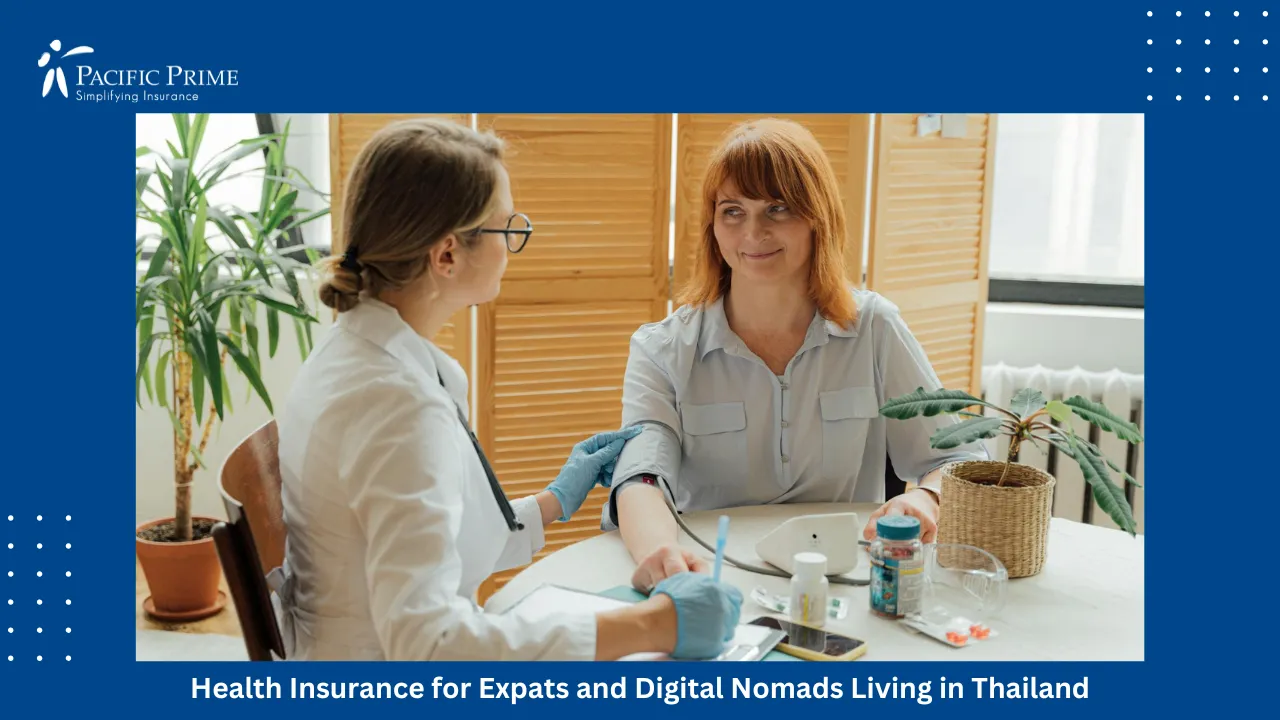
Although the DTV visa doesn’t require applicants to have health coverage, securing expat health insurance in Thailand is highly recommended. It ensures easy access to Thailand’s excellent private healthcare system and protects you from unexpected medical expenses during your stay.
Essential Coverage Features for Expats and Digital Nomads in Thailand
When living long-term in Thailand, expats and digital nomads should opt for health insurance plans that meet the local healthcare system and regional health risks as well as their personal needs. Ideally, your policy should include:
- Inpatient and outpatient coverage: Protection for hospital stays, surgeries, and serious illnesses, plus access to routine doctor visits and minor treatments.
- Direct billing access: Agreements with major Thai hospitals (e.g., Bumrungrad, Bangkok Hospital, and Samitivej) so you can receive care without paying upfront.
- Coverage for tropical diseases and accidents: Includes treatment for dengue, malaria, and other regional illnesses, along with comprehensive accident protection.
- Dental, optical, and wellness benefits: Support for preventive care, routine checkups, dental treatments, and vision needs to maintain long-term health.
- Emergency evacuation and repatriation: Covers transportation to the nearest suitable medical facility or to your home country when necessary.
With that said, digital nomads and expats can choose from a range of options. International insurers like Cigna, AXA, and Allianz offer global coverage tailored for expats in Thailand, while local insurers provide Thailand-specific plans that balance affordability with reliable benefits.
To explore your options, here is our comprehensive article on Top Health and Travel Insurance Providers in Thailand for Expats.
Secure Your Health Insurance in Thailand with Pacific Prime
Applying for a DTV visa and preparing for your move to Thailand can feel overwhelming, but these steps are essential for a smooth, worry-free journey. Likewise, having comprehensive health insurance ensures access to quality healthcare and provides peace of mind throughout your stay.
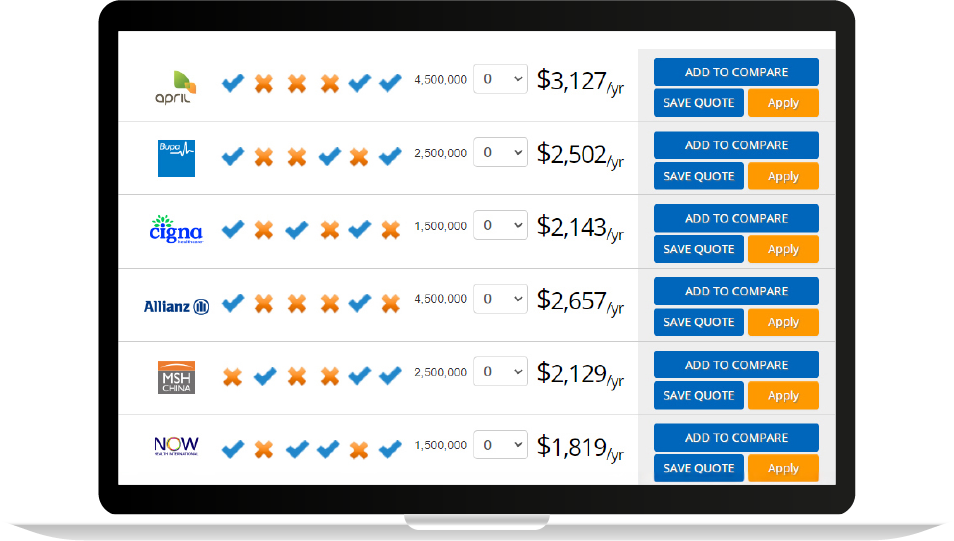
As an insurance broker with 25+ years of experience, Pacific Prime helps expats make informed decisions regarding their coverage abroad, comparing multiple plans from different providers to find a comprehensive insurance plan that best suits their budgets and needs.
If you’re considering moving to Thailand, contact us today for a free quote comparison and expert, unbiased advice.
Frequently Asked Questions
Can I work in Thailand with a DTV visa?
DTV holders are allowed to work remotely for companies or clients outside Thailand; however, working for a Thai company or engaging in local business activities is not permitted. Those who wish to work or conduct business in Thailand should apply for a Non-Immigrant “B” Visa and a work permit.
What visa allows the longest stay in Thailand?
Options for long-term stays include the Long-Term Resident (LTR) Visa, Thailand Elite Visa, and O-X Visa for retirees. The LTR and Elite visas can offer up to 10–20 years of residence, depending on the program.
What is a Soft Power Visa?
A Soft Power Visa is a category under the DTV that allows foreigners to stay long-term in Thailand while participating in cultural, educational, or wellness activities, such as Muay Thai, cooking classes, sports training, seminars, music festivals, or medical treatments.
Can I open a bank account with a DTV Visa Thailand?
DTV visa holders can open bank accounts in Thailand, provided they present the necessary documents, such as a passport, visa, and proof of residence. Requirements may vary by bank.
How long can I stay in Thailand without a visa?
Most travelers from countries like the US, UK, Germany, France, and Japan can enter Thailand for tourism without a visa for up to 60 days. This period can often be extended for an additional 30 days by applying at a Thai immigration office before the initial stay expires.
- Thailand Digital Nomad Visa 2025: How to Apply – October 20, 2025
- Top Health Insurance in Thailand for Spanish Expats: Options and Benefits – October 20, 2025
- Arab Orient Insurance and GIG Health Insurance for Expats in Dubai – October 15, 2025


Comments