

The Complete Guide to Moving Abroad as an Expat
Moving abroad can be an exciting yet daunting experience. Read our comprehensive guide to moving abroad as an expat for peace of mind.
Moving abroad can be an exciting yet daunting experience. Read our comprehensive guide to moving abroad as an expat for peace of mind.

In today’s increasingly globalized world, flying to another country has never been easier. However, when it comes to relocating to a new destination, there are so many things you’ll have to take into account and it’s often easy to miss one or two important steps.
In this section, we’ve created a comprehensive three-part checklist below to aid you with your travel arrangements. Follow this outline to sort out priorities and minimize last-minute surprises as the moving date gets closer.
General
|
Travel
|
Work
|
Health
|
Accommodation
|
Education
|
Transport
|
Finances
|

One of the primary considerations to make when thinking about moving abroad is to decide whether where you want to go, or whether the place you have an opportunity to move to is considered a good country for expats. To help you with this common expat dilemma, we have listed several things for you to look into to decide if the quality of life in your destination is something you’re looking for. Before making a decision to move abroad alone or with family, we suggest that you research the following aspects of living abroad:
When it comes to discussing the best countries for expats, the term ‘quality of life’ often pops up. Quality of life is not one single item, but rather a set of different aspects of life that translates into overall life satisfaction. It includes all major areas of life, such as physical health, safety, employment opportunities, wealth, culture, environment, and so on.
So, what are the best locations for expats to move to? Let’s look at the results of Expat City Ranking 2024 listing the best places for expats in 2024 to live and work!
The survey gathered data from more than 12,543 respondents that represent a total of 175 nationalities and live in 174 locations to see what living and working far from home really is like. It covered different areas of life such as quality of life, ease of settling in, working abroad, personal finances, and expat essentials. These considerations are what jointly can be described as the quality of living in those places.
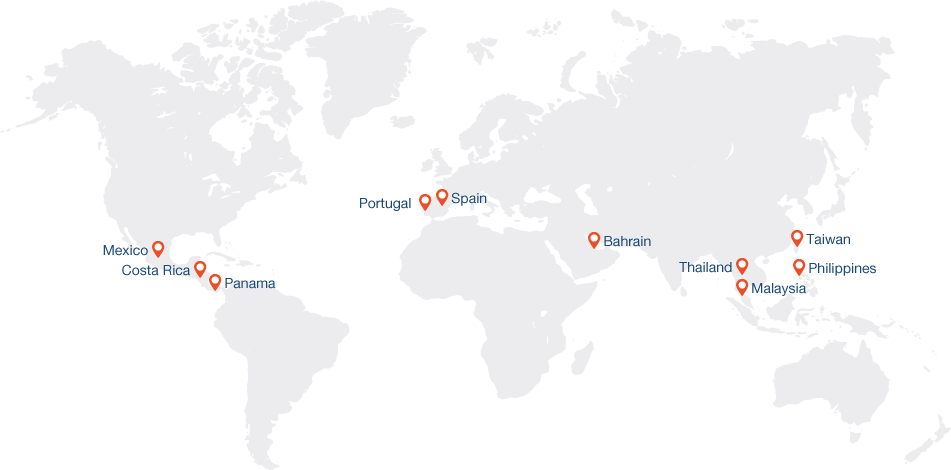
| 1. Mexico | 6. Thailand |
| 2. Spain | 7. Costa Rica |
| 3. Panama | 8. Philippines |
| 4. Malaysia | 9. Bahrain |
| 5. Taiwan | 10. Portugal |
| 1. Mexico | 6. Thailand |
| 2. Spain | 7. Costa Rica |
| 3. Panama | 8. Philippines |
| 4. Malaysia | 9. Bahrain |
| 5. Taiwan | 10. Portugal |
If you are moving with your children, research your destination’s schooling system and schools early on. Some countries have abundant choices of international schools while some have robust public school systems that can accommodate foreign pupils. The language of your kids’ education is also another decision to make.
Look into matters such as political tensions, crime rates, the attitude of the local population towards other cultures and nationalities, as well as any environmental hazards, such as typhoons, or bad air quality. Such due diligence can give you and your family peace of mind as you move.
In some countries, people are very open and making new friends will be relatively easy, whereas some cultures are more reserved. When you move, you are expected to respect the local rules, traditions, and culture. Some cultural research will let you know what you can expect.
Women and members of the LGBTQ+ community moving abroad are advised to pay particular attention to their destination country’s culture and social norms. What might be seen as common or accepted in some countries might not be considered so in others.
Some countries have excellent public healthcare systems that are open for expats, while some might require expats to take out private health insurance for any medical coverage. Researching the healthcare systems in your destination country is a crucial step in ensuring a quality life in your new home.
Checking if your local driving license works in the new country, or what the procedure for getting a new one looks like would be useful if you want to drive in your destination. We also recommend researching the public transportation system and possible language barriers you might encounter in your daily use.

Your finances should be your top consideration when making this decision. Plan your budget ahead of time, be prepared for extra expenses, and research the banking and tax system of your destination country beforehand can help you settle into your new home.
If you’re a digital nomad without a steady flow of income, your finance and budget planning will be different than that of an expat moving for a job with perks provided by their employer. Single expats will also have different needs and considerations compared to ones moving with their families. Your finances should reflect your unique needs and situation.
Researching the cost of living for expats should be the first thing you do when moving to a new country. The change in the cost of living is inevitable. If you come to a new place unprepared for all the possibilities, it might backfire and ruin all the fun and excitement of relocating.
If you’re moving for a job, there is a chance your employer will help with some of your costs such as accommodation, or school fees for your children. However, if you’re moving with the hope of finding a job on the spot, try to estimate your daily cost of living as an expat in a new place, and plan your budget accordingly.
The cost of living for expats usually takes into account the costs of accommodation, utilities, transportation, and relocation, as well as eating out and hobbies/past-time activities.
While comparing different cities or countries, see how much of your probable salary/income you’d have to spend every month just to cover the basics such as rent, transportation, phone and utility bills, grocery shopping, etc., and use that information to decide if that’s the lifestyle you’re looking for. Just to give you an idea, below you can find the top ten most expensive cities for expats to live in:
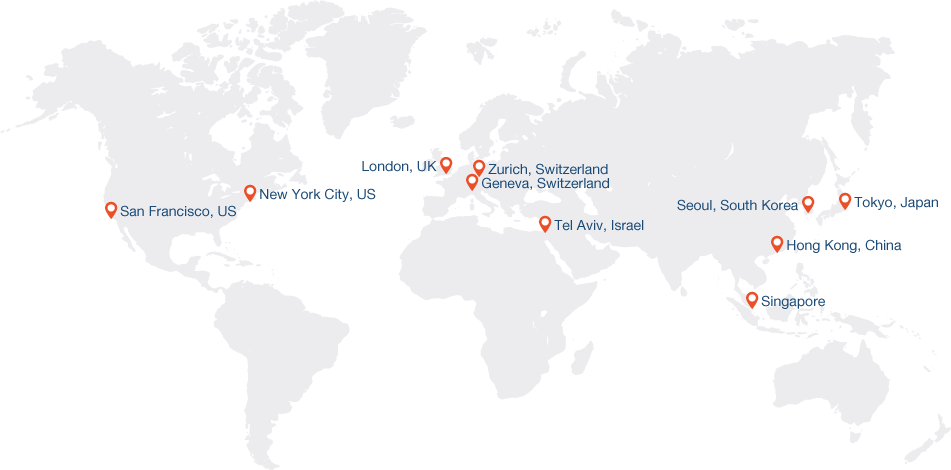
| 1. Hong Kong, China | 6. Tel Aviv, Israel |
| 2. New York, USA | 7. Zurich, Switzerland |
| 3. Geneva, Switzerland | 8. Shanghai, China |
| 4. London, UK | 9. Guangzhou, China |
| 5. Tokyo, Japan | 10. Seoul, South Korea |
| 1. New York City, US | 6. Zurich, Switzerland |
| 2. Hong Kong, China | 7. San Francisco, US |
| 3. Geneva, Switzerland | 8. Tel Aviv, Israel |
| 4. London, UK | 9. Seoul, South Korea |
| 5. Singapore | 10. Tokyo, Japan |
As an expat, you should be prepared for extra expenses, such as buying a whole new set of furniture, expat health insurance, education fees, local taxes, and other administration and/or visa fees, rent, costs of a local driving license, etc.
Another aspect of the extra expenses you should take into consideration can relate to your assets back in your home country. If you’re currently renting out your apartment or house, you might have to hire someone to take care of such matters for you, for example.
Before moving to a new place, make sure to open up an international account/card so you can use your card worldwide. Also, we’d recommend getting some local currency beforehand, or at least any of the major currencies used in the region. Moving forward, you might want to consider switching to a local bank account, or opening an account in an international bank, so your future money transfers are more straightforward and cheaper.
And then there are taxes. Make sure you understand how your home country works together with your new home in terms of taxes, and in particular, agreements to avoid double taxation. There might be forms to fill in both in your home country and in the new one, so make sure you properly research the steps and regulations on that matter to avoid unpleasant surprises.

Moving abroad is a big decision, and unless you have enough money to support yourself in your destination country, you will most likely need to work. This means you will have to look for a job yourself, research visa requirements, local business etiquette, and whether the job you’re applying for offers good enough employee benefits to make your stay and work in your destination country worthwhile. In just a second, you will learn how to get a job abroad before moving.
There are several approaches to securing a job abroad. You can either try to find one before you move, or if you’re more adventurous, find one after you’ve moved to your destination country.
A safe approach to moving to a new country is to get a job ahead of time. This allows you to plan and settle in a new country easier and faster. How does one go about securing a job abroad, though?
Finding a job after you’ve already moved is not that much different than the previous process. But at the same time, it gives you one big advantage: being there in person. Now you have a chance to connect with decision-making people via LinkedIn and meet them in person, go to the interviews in person, work on extending your localized network, and attend business and networking events at your dream destination!
Even though we live in a globally connected world, and business is made internationally, that doesn’t mean there is only one business culture/etiquette out there. Sometimes, not knowing the local business customs can break a deal – or even result in you not getting a job to begin with. While effective communication is key to every relation, adapting to the local rules of conducting business can only bring you more benefits!
For example, business days in Israel are from Sunday to Thursday, and the Chinese make a connection through social activities, especially meals. Also, while working in Germany, it is better to be straightforward and get straight to the point, whereas in many Asian countries it’s not a good strategy to publicly talk about any mistakes, as there is a strong culture of “saving face”.

Many first-time expats are quite confused when it comes to the employee benefits package presented to them in the new overseas location. Expats commonly ask: “How do I know if my offer is good?”, and “What is usually included and useful to have in an expat employee benefits package?”. Drawing upon our experience in employee benefits plan design, we suggest you, as an expat, consider the following when accepting a job offer:

If there’s one area that is crucial but easily overlooked when you are preparing for your move, it’s healthcare. While the healthcare systems in different countries vary a lot, the key differences between private healthcare facilities and their public counterparts remain universal.
Private healthcare facilities usually offer higher standards of care versus their public counterparts, with an ample number of medical staff per patient, short waiting time, modern facilities, better privacy, and extra amenities for personalized comfort.
Public facilities are supported and subsidized by governments, while private facilities are profit-making businesses. Thus, public institutions are significantly more affordable than private ones. We will touch on that in greater detail in the next section.
Government hospitals aim to offer healthcare to the general public at a lower cost, while private facilities mainly target expatriates and wealthier residents. Therefore, public hospitals are often overburdened and have long waiting times.
Another reason expat patients prefer private over public care is that they can enjoy more comfort and privacy, without having to worry about the potential for a language barrier. Not only can they focus on recovery in a private environment, but they can even opt for add-on perks such as Wi-Fi access, en-suite bathrooms with premium toiletries, and sometimes even massages.
Where you should go depends entirely on your budget and needs (comfort, location, privacy preferences, etc.). A solid expat health insurance policy can go a long way in helping foreigners access private care as, in most cases, they do not have access to the publicly subsidized healthcare system.
Governments across the world have been plagued by the escalating costs of offering healthcare services to their citizens for many years. From the research and general data that we have seen, hiking medical inflation is not going to abate anytime soon.
| Country | Health Expenditure per Capita (USD) |
|---|---|
| United States | 12,473.79 |
| Switzerland | 10,897.45 |
| Norway | 8,693 |
| Monaco | 8,634.26 |
| Australia | 7,055.37 |
| Luxembourg | 6,956 |
| Netherlands | 6,539 |
| Austria | 6,505 |
| Iceland | 6,400 |
| Ireland | 6,349.48 |
| Denmark | 6,332 |
| Canada | 6,207.18 |
| Germany | 6,191.04 |
| Sweden | 5,980.00 |
| Belgium | 5,680.23 |
Source: World Bank
Although some countries, such as Thailand, offer a robust, universal public healthcare system to ensure that their citizens can have access to affordable, yet quality health services, newly arrived expats are often excluded from such protection. In other words, foreign patients will have to foot the medical bill out of their own pockets if they do not have an expat medical insurance plan.
Medication may be the last thing on your mind when you’re moving abroad. However, the medicine readily available in your home country may not be recognized, or even legal, in another country. Hence, sorting out your repeat prescription should be one of the first things on your to-do list.
First things first, check the local law to see whether you are allowed to bring the medication into the new country to avoid accidentally smuggling forbidden drugs.
Generally speaking, if you are entering a new country with medicine, you should bring along your GP letter, a paper copy of your repeat prescription, and a personal license if it is a controlled medicine or injection. Your GP letter should specify the chemical name of your medication, the dosage you require, and the amount you should bring with you.
Depending on which country you are moving to and what medicine you need, usually you can prescribe the required medicine via the following ways:
In order to address the costs of healthcare in a foreign country, many expats will choose to take out a private health insurance plan. Below we will compare three different types of health insurance, and explain how they work to help you determine which is the best option for you.
If your employer-provided health insurance is not ensuring adequate protection, instead of purchasing an independent health insurance plan from scratch, you can secure a top-up insurance plan to supplement the coverage gaps. Top-up plans typically offer additional coverage over an existing corporate plan, and can also expand on coverage benefits that may not be sufficient.
If your employer has not provided you with a health insurance plan, it’s best that you secure one for yourself. Local insurance plans are great for use inside the country in which they are issued, as they protect policyholders from potentially overwhelming financial risks and afford expats access to private medical facilities.
However, as its name suggests, local plans are restricted to the country where they are issued so they may not be the best plan for those who need to fly between countries frequently.
Despite globally increasing medical costs, we find that the average cost of health insurance across all locations, insurers, and demographics can vary immensely. In light of this, it will be useful to refer to our Cost of International Health Insurance Report, which compares the average costs of international health insurance for individuals and families in 100 countries, so that you can plan your budget better with the estimated costs.