300x85-png.webp)


 Hong Kong
 Singapore
 China
China Dubai
Dubai Thailand
 United Kingdom
 Mexico
Expats in Beijing have access to top-tier medical facilities, including both public and private hospitals. Leading options include China-Japan Friendship Hospital and Amcare Women’s and Children’s Hospital. Public hospitals are generally well-equipped and affordable, though often crowded. Private hospitals, while more expensive, offer shorter wait times, international services, and higher comfort levels.
Discover the world’s top
health insurers.
Compare quotes with
a click of the button.
Choosing between them depends on your priorities. As an expat in China seeking reliable healthcare, you’ll need to weigh cost, convenience, and service quality. Public hospitals provide dependable care at a lower cost, but longer wait times may be a concern. Private hospitals cater to expats with English-speaking staff, quicker service, and modern amenities, making them a preferred choice for many.
Public vs. Private Hospitals in Beijing
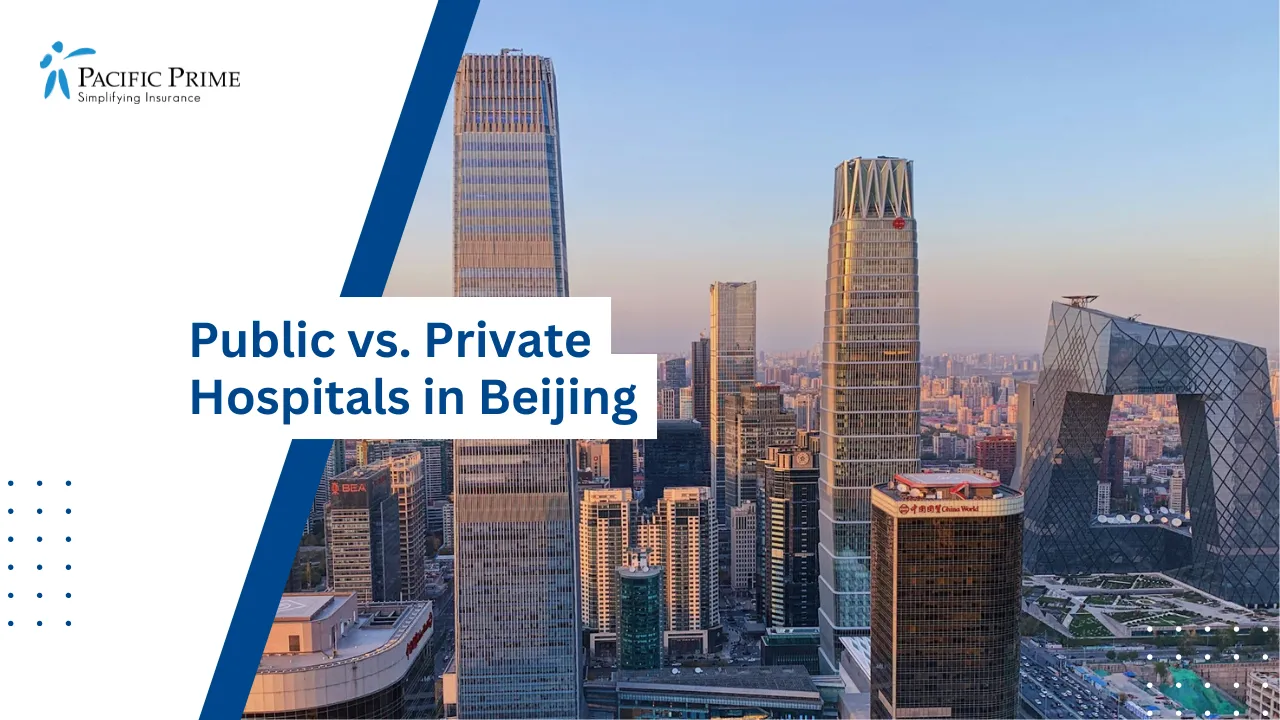
Beijing has both public and private hospitals available. Much like any other country, public and private hospitals in Beijing have their share of benefits and drawbacks to which expats may prefer one over the other.
Both public and private hospitals offer various types of healthcare services ranging from primary to specialist care.
Pros and Cons of Public Hospitals in Beijing
Beijing’s public hospitals, for instance, are generally excellently equipped, have a full array of medical staff, and the majority of public hospitals are affiliated with universities.
Thanks to its excellent array of medical equipment, its full array of staff, and affiliation with universities, expats living in Beijing will definitely have access to the treatment they need.
However, one key drawback with public hospitals in Beijing is that they can be crowded during peak hours in particular, which causes potentially long waiting times and delayed healthcare for non-emergency cases which expats may find problematic.
Why Expats Choose Private Hospitals in Beijing
In contrast, while private hospitals in Beijing are considerably more expensive, they make up for it with their smaller size accommodating fewer patients. This makes private hospitals less crowded, which allows shorter waiting times even for non-emergency treatment which expats may prefer.
Additionally, due to them being considerably more expensive than public hospitals, private hospitals also offer greater quality care as well as amenities with services.
Choosing Between Public and Private Care
Whether you should opt for public or private hospitals in Beijing will depend on your budget and the urgency of care needed. For instance, if you are tighter on budget and don’t mind waiting a bit longer or losing out on some amenities, public hospitals might be a viable option.
On the other hand, if you have the budget and if you require more urgent treatment without having to wait too long due to the hospital being crowded, or if you would like greater amenities for yourself or your family, you can then opt for private hospitals.
Recommended Hospitals in Beijing for Expats
Below, we’ve compiled a list of some notable hospitals available in Beijing for expats, public and private, along with their contact information.
Public: China-Japan Friendship Hospital Overview
Founded back on October 23rd, 1984, the China-Japan Friendship Hospital is a joint venture between the Chinese and Japanese governments featuring a large complex with nearly sixty departments.
Being a teaching hospital for the Beijing University Medical School, this hospital utilizes a unique approach with an emphasis on combining Eastern and Western medicinal therapies. Additionally, the hospital also specializes in organ transplantation and comprehensive tumor treatment.
Contact
Official Site: 中日友好医院 (zryhyy.com.cn)
Address: 2 Yinghuayuan E St, Chaoyang District, Beijing, China, 100013
Phone: (+86) 10 8420 5288

Public: Peking Union Medical College Hospital Profile
The Peking Union Medical College Hospital (PUMCH) is a comprehensive hospital specializing in delivering state-of-the-art medical care, innovative scientific research, and rigorous medical education.
Founded in 1921 by the Rockefeller Foundation, the hospital is known for its full range of disciplines, cutting-edge technology, and outstanding specialties. Additionally, the hospital has also ranked N.O.1 three times in the national hospital performance assessment of tertiary public hospitals.
Contact
Official Site: 北京协和医院 (pumch.cn)
Address: 1 Shuaifuyuan Wangfujing, Dongcheng District, Beijing, China, China
Phone: (+86) 10 6513 5844
Private: Amcare Hospital for Maternity and Pediatric Care
Established in 2004, Amcare Women’s and Children’s Hospital specializes in high-end international medical care for women and children with an emphasis on high-quality gynecology, obstetrics, and pediatric medical services for local Chinese families and expat families alike.
The hospital offers a wide range of advanced healthcare services such as parental care, delivery services, postpartum recuperation, critical medication, pediatrics, and other related services.
If you’re an expat in Beijing looking for an excellent-value maternity hospital, Amcare Women’s and Children’s Hospital is one you definitely don’t want to miss.
Contact
Official Site: U.S.-China Yihe Women’s and Children’s Hospital (amcare.com.cn)
Address: 9 Fangyuan W Rd, Chaoyang District, Beijing, China, 100016
Phone: (+86) 10 6434 2399
Private: Beijing United Family Hospital Services
Opened back in 1997, the Beijing United Family Hospital was the first international standard hospital established in China and was also a joint venture between China International, Inc. and the Chinese Academy of Medical Sciences.
The hospital has been offering premium healthcare to various local Chinese and expat families thanks to over 200 full-time senior physicians and specialists worldwide providing professional expertise and care.
Also offered are various medical services ranging from 24-hour emergency services to wellness treatment as well as state-of-the-art MRI technology, endoscopies, laparoscopic surgeries, cardiovascular intervention, plastic and cosmetic surgery, neurosurgery, and more.
For expats seeking pediatric care, this hospital also features a Children’s Health Center featuring comprehensive pediatric care and a warm, child-friendly environment ready to welcome parents and children with open arms.
Contact
Official Site: Beijing United Family Hospital | Beijing United Family Hospital and Clinics (ufh.com.cn)
Address: 2 Jiangtai Rd, Chaoyang District, Beijing, China, 100016
Phone: (+86) 10 5927 7000
Private: Oasis International Hospital Facilities
Oasis International Hospital opened back in February of 2012, is a full-service private hospital offering international-standard healthcare to both local Chinese families and expat families alike.
Oasis features up to 30 departments including internal medicine, surgery, obstetrics, pediatrics, dental, vision, ear, nose, and throat (ENT), traditional Chinese medication, dermatology, and urology department.
For urgent cases, the Oasis International Hospital also features additional departments such as a 24-hour emergency department, an intensive care unit (ICU), and a newborn intensive care unit (NICU), all equipped with large advanced medical equipment such as MRI and CT scanners.
Contact
Official Site: oasishealth.cn/en/index
Address: 9 Jiuxianqiao Bei Lu, Chaoyang District, Beijing, 100015, China
Phone: 400-8762-747
How to Book a Hospital Appointment in Beijing
Before visiting any hospital, it’s important to make your appointment ahead of time to avoid potentially long waiting times. You can make the appointment by phone or online to ensure you get the time slot that works best with your schedule.
What Documents You Need for a Hospital Visit
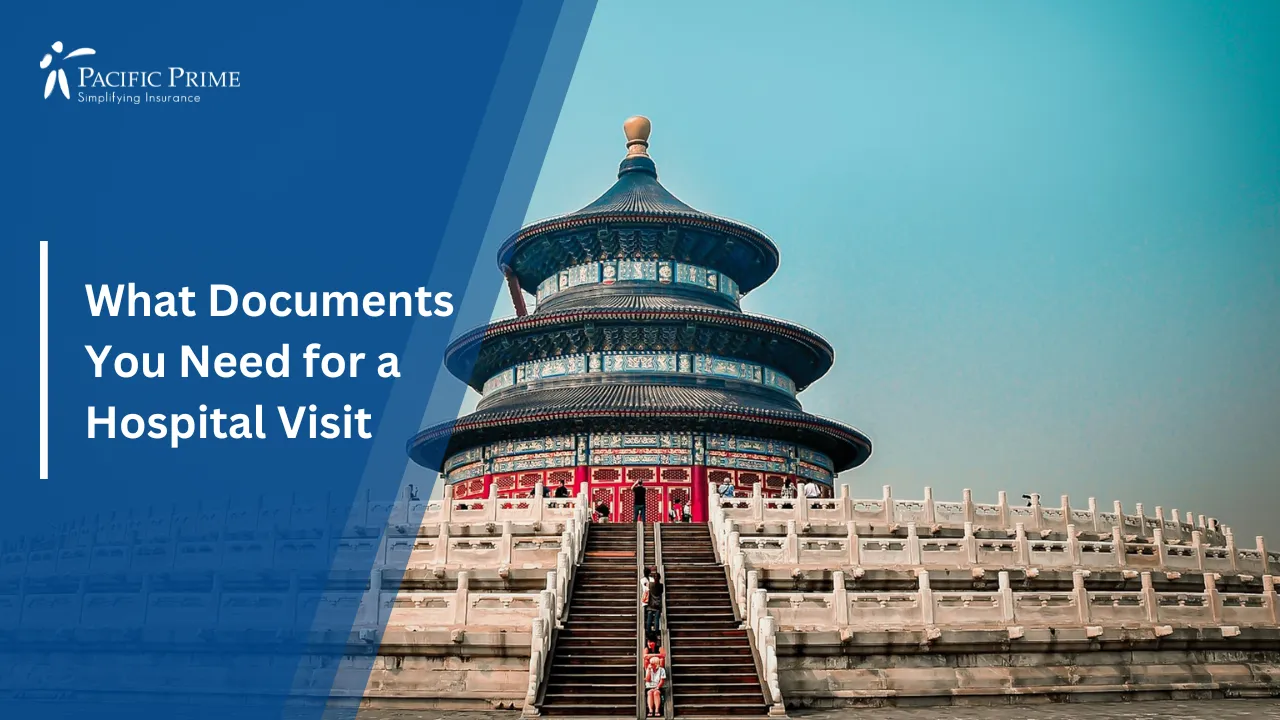
Once you’ve successfully secured your appointment time slot, the next thing you need to do is prepare the required documents. You will have to prepare and bring along various documents such as your passport, visa, health insurance card, and relevant medical records or test results.
Make sure you prepare all required documents and bring them all to the hospital on your appointment date to avoid delays during your visits, especially if you’re opting for a public hospital which can get crowded during peak hours.
Cultural Etiquette and Language Tips for Expats
In Chinese culture, patients generally accept medical treatment from their respective doctors without question and may also bring gifts or any token of appreciation to their doctors. As an expat seeking treatment in Beijing, it’s important to be aware of these cultural norms.
Depending on the hospital in which you’re seeking treatment, you may have some difficulties with a language barrier. Some doctors in Beijing may not be capable of speaking English, which can be problematic for expats in Beijing looking to seek treatment.
In that case, you have the option of bringing along a translator in the form of a friend or family member who can speak Chinese to help you navigate through the language barrier when seeking treatment in Beijing as an expat.
Frequently Asked Questions
Is healthcare free in Beijing?
China has free public healthcare, under the country’s social insurance plan, which offers basic coverage for most of the native population as well as expats in most cases.
Is Beijing a good city for expats to live in?
Beijing is an ideal city for expats who wish to live in China. This can be seen in its huge community of expats and English speakers.
Who owns the hospitals in Beijing?
The National Health Commission directly owns some hospitals in Beijing, while the Ministry of Education-administered national universities also own affiliated hospitals.
Conclusion
In conclusion, both public and private hospitals in Beijing have their fair share of benefits and drawbacks. For instance, public hospitals right off the bat are excellently equipped with a full array of medical staff but the waiting time can be long due to the hospital being crowded.
On the other hand, private hospitals offer even greater quality care with the addition of amenities and shorter waiting times for non-emergency cases due to the hospital not being crowded.
Whether you opt for public or private hospitals in Beijing, always remember to do your research on the hospital, book an appointment ahead of time, and prepare the necessary documents as an expat such as visas or passports to ensure you get the smooth, hassle-free, treatment you deserve as an expat.
As a leading international health insurance broker, Pacific Prime has over 20 years of matching both local citizens and expats to health insurance plan that matches both their budget range and unique healthcare needs.
Whether you’re a local Chinese citizen yourself or an expat living in China, Pacific Prime and our team of expats are more than happy to help you find your health insurance plan of choice. And if you have any further questions, please get in touch with us.
Enjoyed this article? Check out our other articles below!
15 Proactive Health Strategies for Expats in China
Top 11 International Insurance Companies in China for Expats

Serena earned her Bachelor’s Degree in Psychology from the University of British Columbia, Canada. As such, she is an avid advocate of mental health and is fascinated by all things psychology (especially if it’s cognitive psychology!).
Her previous work experience includes teaching toddlers to read, writing for a travel/wellness online magazine, and then a business news blog. These combined experiences give her the skills and insights she needs to explain complex ideas in a succinct way. Being the daughter of an immigrant and a traveler herself, she is passionate about educating expats and digital nomads on travel and international health insurance.
- How to Compare Travel Insurance Plans the Smart Way – October 21, 2025
- Best Hospitals in the UAE: Top Picks in Dubai and Abu Dhabi – October 21, 2025
- How Much is a Doctor Visit in Dubai Without Insurance? – October 21, 2025



Comments