300x85-png.webp)


 Hong Kong
 Singapore
 China
China Dubai
Dubai Thailand
 United Kingdom
 Mexico
Canada is one of the top destinations for expats thanks to its mix of natural landscapes and urban lifestyle. The cost of living varies depending on where you settle. Major cities like Toronto and Vancouver are pricier, while smaller cities like Winnipeg and Edmonton offer more affordable options.
Discover the world’s top
health insurers.
Compare quotes with
a click of the button.
In this Pacific Prime article, we’ll explore the cost of living in Canada, from housing and food to transportation and healthcare. We’ll also explain why securing international health insurance in Canada is vital for expats looking to protect their well-being while living abroad.
Cost of Housing in Canada
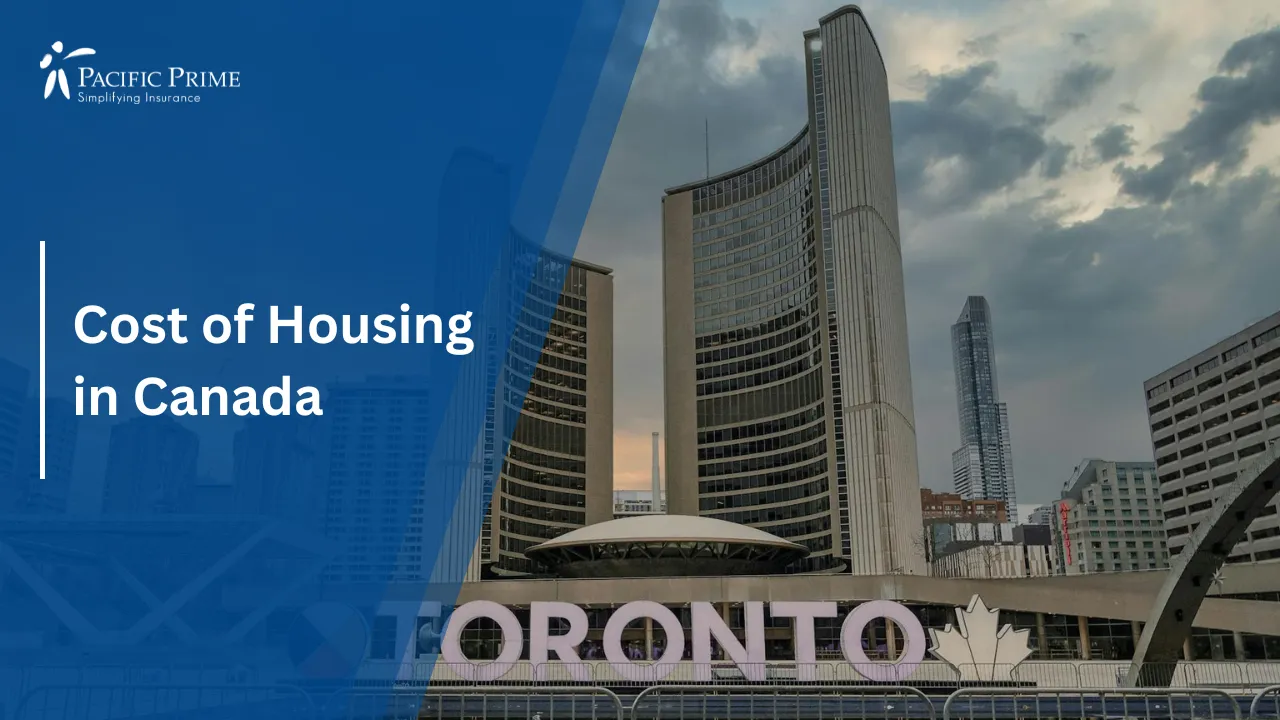
Canada’s vast geography offers diverse housing options, with costs varying significantly by region and city—from high-priced major cities like Vancouver and Toronto to more affordable towns such as Winnipeg, Edmonton, or Quebec City.
Here are some average rental prices across Canada, ranked from highest to lowest, according to CIC News:
| City | Studio Apartment Rent | One-Bedroom Rent | Two-Bedroom Rent |
| Vancouver | $2,331 CAD ($1,702 USD) | $2,679 CAD ($1,956 USD) | $3,668 CAD ($2,677 USD) |
| Toronto | $1,727 CAD ($1,261 USD) | $2,507 CAD ($1,830 USD) | $3,356 CAD ($2,451 USD) |
| Ottawa | $1,620 CAD ($1,183 USD) | $1,990 CAD ($1,453 USD) | $2,465 CAD ($1,800 USD) |
| Calgary | $1,578 CAD ($1,152 USD) | $1,885 CAD ($1,376 USD) | $2,274 CAD ($1,660 USD) |
| Montreal | $1,471 CAD ($1,074 USD) | $1,775 CAD ($1,296 USD) | $2,281 CAD ($1,665 USD) |
| Quebec City | $1,048 CAD ($765 USD) | $1,353 CAD ($988 USD) | $1,713 CAD ($1,250 USD) |
| Edmonton | $1,046 CAD ($763 USD) | $1,349 CAD ($985 USD) | $1,635 CAD ($1,193 USD) |
| Winnipeg | $971 CAD ($709 USD) | $1,349 CAD ($985 USD) | $1,735 CAD ($1,266 USD) |
In large metropolitan areas like Vancouver and Toronto, rental prices are the highest in Canada, with one-bedroom apartments averaging over CAD 2,500 (USD $1,830+). These cities are followed by Ottawa and Calgary, where rents are moderately high but still more affordable than the top-tier cities.
Meanwhile, Montreal offers a nice balance between affordability and urban living, with one-bedroom apartments renting for around CAD $1,775 (USD $1,296).
Rental prices are lowest in smaller cities like Edmonton and Winnipeg, where one-bedroom apartments average around CAD $1,349 (USD $985) or less. These cities offer a more budget-friendly option for expats or students without sacrificing access to urban infrastructure.
Buying Property in Canada as an Expat
As of January 1, 2023, most non-Canadians are prohibited from purchasing residential property in Canada. This restriction is in place under the Prohibition on the Purchase of Residential Property by Non-Canadians Act and has been extended to last until January 1, 2027.
The government introduced this act in 2022 as part of Canada’s effort to battle soaring housing costs, pointing to foreign investors buying homes without ever living in them as a key factor behind the rising prices.
The new act is not a complete ban on foreign property ownership. Foreign investors can still purchase recreational properties like cottages or vacation homes. Multi-unit buildings with more than three units are also exempt.
Moreover, the ban does not apply to homes located outside census metropolitan areas—defined as cities with populations over 100,000.
Apart from Canadian citizens and permanent residents, work permit holders can also buy one residential property in Canada, but only if they have been working full-time in the country for at least three years prior to the purchase.
Utility Costs in Canada
The average monthly utility costs in Canada can vary significantly depending on factors such as the province you live in, the size and age of your home, seasonal climate differences, and the energy source used (e.g., electric vs. natural gas heating). Here’s a general estimate for your budgeting.
In Toronto, for instance, basic utilities—including electricity, heating, cooling, water, and garbage services—for an 85 m² apartment typically cost around CAD $160 (USD $117) per month, according to data from Numbeo. High winter heating bills can increase this amount in colder months.
Adding to that, home internet costs in Canada average CAD $80 (USD $58) per month for unlimited data plans with moderate speeds (60 Mbps or higher). A basic mobile phone plan with calling, texting, and limited data typically costs CAD $50 (USD $36) or more, depending on the provider and region.
Altogether, you can expect total monthly utility and communication costs to range from CAD $290–$350 (USD $213–$257) in most urban areas, and higher in remote or northern regions, or during peak winter months.
Groceries and Food Costs in Canada
Food expenses are the second-largest living cost in Canada after housing. In 2025, the average monthly grocery and food costs for a single person range from CAD $400–$750 (USD $290–$550), depending on the city and lifestyle. Below is a breakdown of typical monthly grocery budgets by city:
| City | Minimal Budget | Average Budget | Comfortable Budget |
| Toronto | CAD $450 (USD $329) | CAD $550 (USD $402) | CAD $700 (USD $511) |
| Vancouver | CAD $470 (USD $343) | CAD $580 (USD $424) | CAD $750 (USD $547) |
| Calgary | CAD $430 (USD $314) | CAD $520 (USD $380) | CAD $690 (USD $504) |
| Montreal | CAD $400 (USD $292) | CAD $500 (USD $365) | CAD $660 (USD $482) |
| Winnipeg | CAD $390 (USD $284) | CAD $480 (USD $350) | CAD $640 (USD $467) |
Meat and dairy tend to be the most expensive food items. Grocery prices are also higher in major metropolitan areas like Toronto and Vancouver. Fresh fruits and vegetables are generally cheaper in summer and fall but more expensive in winter due to increased reliance on imports.
To reduce your monthly grocery bill, consider shopping at large supermarket chains such as Loblaws, Walmart, or Safeway, and take advantage of discount flyers, loyalty programs, or bulk deals.
Transportation Costs in Canada
Transportation costs in Canada can vary widely depending on the city you live in and your commuting preferences. In major metropolitan areas like Toronto, Vancouver, and Montreal, public transit systems are well-developed and are a viable option for daily commutes.
A monthly transit pass for the Toronto Transit Commission (TTC) costs CAD $156 (USD $114), while in Montreal, it’s slightly cheaper at CAD $100 (USD $73). Single adult fares generally range from CAD $3–$3.75 (USD $2.20–$2.75) per ride, depending on the city and transit agency.
In Toronto, the TTC (Toronto Transit Commission) is the main system, while Vancouver relies on TransLink, and Montreal on the STM (Société de transport de Montréal). These systems offer integrated services and fare options for regular commuters, students, and seniors.
In smaller cities, public transportation is often more limited or even unavailable, necessitating the need for personal vehicles. The average cost of owning a car in Canada—including payment, interest, insurance, fuel, maintenance, and parking—comes to around CAD $1,370 (USD $1,001) each month.
Gas prices fluctuate by province, with an average around CAD $1.32 per liter (USD $3.65 per gallon) as of mid-2025.
Entertainment and Leisure Costs in Canada

Entertainment and leisure costs in Canada are moderate compared to other Western countries, but they can vary depending on your location and lifestyle choices.
A standard movie ticket costs around CAD $15–$17 (USD $11–$12.50), while a monthly gym membership in a mid-range facility typically ranges from CAD $40–$70 (USD $29–$51).
Dining out at a mid-range restaurant will usually cost about CAD $25–$35 (USD $18–$26) per person. A pint of beer at a pub runs around CAD $7 (USD $5), while a cappuccino averages CAD $4.50 (USD $3.30).
Outdoor leisure is also a big part of life in Canada, with national and provincial parks offering year-round activities like hiking, skiing, and camping.
For example, entry to the world-famous Banff National Park for one adult costs CAD $11 (USD $8), or you can save more with the annual Parks Canada Discovery Pass, which costs CAD $75.25 (USD $55) per year.
Newcomers and new Canadian citizens can also enjoy one year of free admission to all places administered by Parks Canada by registering on their Canoo app.


Education Costs in Canada
Education in Canada is generally high quality and well-funded, especially in the public system. For residents and permanent residents, public schooling from kindergarten through grade 12 is free. However, private and international school fees vary widely depending on the institution and location.
Kindergarten to High School
Public schools do not charge tuition for Canadian citizens and permanent residents. However, international students attending public schools typically pay CAD $9,500 to $17,000 (USD $6,935–$12,410) per year. Non-Canadian students can enroll in public schools across Canada.
Private schools can be significantly more expensive, with fees ranging from CAD $15,000 to $30,000 (USD $10,950–$21,900) annually. Elite international schools, especially in cities like Toronto or Vancouver, may charge upwards of CAD $40,000 (USD $29,200) per year.
College and Vocational School Costs
Over the years, Canada has emerged as a top destination for international students, thanks to its diverse, multicultural society and globally renowned educational institutions.
Tuition fees for Canadian citizens at public universities typically range from CAD $6,000 to $9,000 (USD $4,380–$6,570) per year for undergraduate programs.
For international students, the costs are considerably higher—ranging anywhere from CAD $33,000 to $73,000 (USD $24,100–$53,350) annually, depending on the field of study and the institution.
For instance, the University of Toronto—ranked 25th in the 2024 QS World University Rankings—lists estimated 2025 tuition fees for international students at CAD $61,720 (USD $45,000) for Arts and Commerce programs and CAD $67,370 (USD $49,100) for Engineering.
Additional fees, like on-campus accommodation and meals, cost approximately CAD $3,000–$8,000/year (USD $2,200–$5,900). Off-campus shared housing ranges from CAD $500–$1,500/month (USD $360–$1,100).
International students looking to continue higher education in Canada should be prepared for the higher tuition fees and living costs, but they may find value through scholarships and provincial pricing differences.
The Cost of Healthcare in Canada

Canada is renowned for its universal healthcare system, but not all services are free—especially for those without public provincial health coverage (Medicare), international visitors, or those seeking private or expedited care.
Canada’s healthcare system is structured as a publicly funded, provincially administered system known as Medicare. It is not centralized, but rather a mix of federal oversight and provincial responsibility through managing healthcare services, including hospitals and physician care.
Medicare, Canada’s public health insurance, ensures all Canadian citizens and permanent residents have free access to medically necessary services, including:
- Doctor visits
- Hospital care
- Diagnostic tests
But it does not usually cover:
- Prescription drugs (unless administered in hospital)
- Dental care
- Vision care
- Mental health care
- Long-term care or rehab
These are often paid out of pocket or covered by private health insurance.
Here’s a more comprehensive look at the out-of-pocket costs for healthcare services across Canada in 2025:
General Practitioner and Specialist Consultations
Without provincial insurance, GP consultation costs around CAD $100–$150 (USD $73–$110) per visit. Specialist consultations vary by specialty, often starting at CAD $160 (USD $117) per session.
For instance, at a private clinic in Quebec, a 20-minute regular consultation costs CAD $175 (USD $128), while a more specific full medical assessment costs CAD $350 (USD $256). Blood pressure evaluation at a similar clinic will cost around CAD $800 (USD $588).
Cost of Health Checkups and Diagnostic Tests in Canada
In Canada, the cost of general health checkups and diagnostic tests can vary widely depending on the type of tests and whether it’s conducted through public or private services.
For those paying out of pocket, a private X-ray typically costs between CAD $30–$100 (USD $22–$73), depending on the complexity and body part being imaged. A CT scan, which provides more detailed internal views, averages around CAD $600 (USD $440) per session.
MRI scans, often used for brain, spinal, or joint imaging, are the most expensive—ranging from CAD $400 up to $3,000 (USD $295–$2,200), with price depending on the scan type, urgency, and provider.
General health checkups also come with varying price tags, particularly for those without provincial healthcare coverage. An uninsured visit to a walk-in clinic typically costs CAD $50–$150 (USD $37–$110), with the average cost hovering around CAD $100 (USD $73).
For non-insured patients, common blood work and lab tests typically cost:
- Complete Blood Count (CBC): CAD $15–$30 (USD $11–$22)
- Basic Metabolic Panel: CAD $20–$40 (USD $15–$30)
- Lipid Profile: CAD $30–$75 (USD $22–$55)
- Thyroid Panel: CAD $50–$100 (USD $37–$73)
- Liver/Kidney Function Tests: CAD $50–$150 (USD $37–$110)
- STD testing (e.g., HIV, Hep B, Hep C, syphilis): CAD $15–$40 (USD $11–$30)
There are ways to manage or reduce healthcare costs in Canada, particularly for diagnostic testing. Provincial health plans like OHIP (Ontario) or MSP (British Columbia) will usually cover tests ordered by a doctor. However, any elective or self-requested lab work must be paid out of pocket.
Community clinics often provide sliding-scale fees based on income, and telehealth services can offer bundled consultations and lab requisitions at lower rates. These options are especially helpful for newcomers or those in waiting periods before provincial coverage kicks in.
Cost of Inpatient Rooms in Canada
Canadians and permanent residents enrolled in a provincial health insurance plan are covered by the government for a standard (3–5 person) ward room. Semi-private (2 beds) and private (1 bed) rooms usually cost more unless covered by extended health insurance.
For those without coverage, costs must be paid out of pocket. A standard ward room can cost CAD $1,000–$1,500 (USD $730–$1,100) per night, while a private room in a public hospital can cost CAD $2,000–$3,000 (USD $1,460–$2,200) per night or more, especially in major cities like Toronto or Vancouver.
For example, the Queensway Carleton Hospital, a public hospital in Ottawa, charges non-residents CAD $3,810 (USD $2,800) a night for a regular ward and CAD $4,150 (USD $3,050) for a private room.
Having extended health insurance can help cover the cost of semi-private or private rooms and reduce out-of-pocket expenses. Most plans will reimburse a portion or the full amount for upgraded accommodations during hospitalization.
Cost of Common Surgeries in Canada
Canada’s public healthcare system generally covers medically necessary procedures, such as appendectomies, through provincial health insurance plans. For those insured, the out-of-pocket costs are typically limited to small copayments around CAD $100+ (USD $73+).
However, uninsured patients or those seeking treatment privately may face substantial expenses. For instance, an appendectomy can cost approximately CAD $10,000–$35,000 (USD $7,300–$25,500) depending on the hospital, whether it’s a laparoscopic or open surgery, and any complications that may arise.
Below is a sample of costs for common treatments and surgeries in Canada for private or uninsured patients:
| Treatment | Price (CAD $) | Price (USD $) |
| Chronic Hepatitis B | $1,997–$2,556 | $1,460–$1,870 |
| Compensated Cirrhosis | $2,389–$4,462 | $1,745–$3,260 |
| Decompensated Cirrhosis | $8,309–$16,388 | $6,065–$11,960 |
| Hepatocellular Carcinoma | $10,608–$17,187 | $7,750–$12,550 |
| Liver Transplant | $94,328–$106,833 | $68,860–$78,990 |
For complex procedures like liver transplants, total costs include surgery, hospitalization, specialist fees, and follow-up care. While these are typically fully covered for Canadian residents, international patients or those without insurance should be prepared for high upfront charges.
Cost of Medication in Canada
Prescription medications are usually not covered under Canada’s provincial health insurance, unless prescribed at a hospital. Most Canadians rely on a mix of public drug benefit plans, such as Ontario’s OHIP or British Columbia’s PharmaCare, and private health insurance to help offset drug costs.
Out-of-pocket medication costs can vary greatly. For common drugs, prices are generally lower than in the U.S., thanks to government regulation through the Patented Medicine Prices Review Board (PMPRB), which helps keep brand-name drug prices in check.
Below is a sample of average prescription drug prices in Canada:
| Medication | Use | Average Cost (CAD $) | Average Cost (USD $) |
| Atorvastatin (Lipitor) | High cholesterol | $15–$25 / month | $11–$18 |
| Metformin | Type 2 diabetes | $5–$15 / month | $3.65–$11 |
| Salbutamol Inhaler | Asthma | $10–$20 / inhaler | $7.30–$14.60 |
| Sertraline (Zoloft) | Depression / Anxiety | $20–$40 / month | $14.60–$29.20 |
| Amoxicillin (generic) | Bacterial infections | $10–$15 per course | $7.30–$11 |
| Humira (adalimumab) | Autoimmune diseases (e.g., Crohn’s) | $3,000–$3,500 / month | $2,190–$2,555 |
These costs are estimates for uninsured individuals. Most people with provincial or private coverage pay only a copay or a percentage of the price.
Cost of Dental Care in Canada
Dental care in Canada is not covered by the public healthcare system for most adults. As a result, patients typically pay out of pocket or rely on private dental insurance to cover routine checkups, treatments, and emergency procedures.
The cost of dental services can vary based on province, location, and the complexity of treatment. On average, a basic dental checkup (including cleaning, exam, and X-rays) costs CAD $150–$300 (USD $110–$220).
Here’s a breakdown of common dental procedures and their average costs:
| Dental Procedure | Average Cost (CAD $) | Average Cost (USD $) |
| Basic exam and cleaning | $150–$300 | $110–$220 |
| Cavity filling (1 surface) | $150–$250 | $110–$180 |
| Tooth extraction | $130–$300 | $95–$220 |
| Root canal (front tooth) | $600–$900 | $440–$660 |
| Root canal (molar) | $900–$1,500 | $660–$1,100 |
| Dental crown (ceramic) | $1,000–$2,000 | $730–$1,460 |
| Full dentures (set) | $1,500–$3,000+ | $1,100–$2,200+ |
Cost of Accident Treatments in Canada
Though accident-related medical treatments are generally covered by the public healthcare system for Canadian citizens, costs can still arise for non-residents, visitors, or expats without health coverage.
For example, ambulance fees vary by province. In Ontario, patients may be billed CAD $240 (USD $175) for an ambulance ride if they’re uninsured by the OHIP, while in Alberta, the charge can go up to CAD $385 (USD $280) for non-insured individuals.
Emergency room visits for uninsured people can cost between CAD $500–$1,000 (USD $365–$730), depending on the severity and treatments required. For expats, tourists, and international students, health insurance for expats in Canada is highly recommended to avoid unexpected financial burdens.
Fill Your Health Insurance Gaps With Pacific Prime
While Canada’s healthcare system is known for its universal coverage, it doesn’t mean all your medical expenses are fully covered—especially if you’re an expat. From dental care and prescriptions to private hospital stays and emergency treatments, out-of-pocket healthcare costs can add up quickly.
That’s where Pacific Prime comes in. With over 25 years of experience and a global presence, we specialize in helping expats secure comprehensive international health insurance for expats in Canada that fills the gaps left by public healthcare systems, all based on your needs and budget.
Let our team of expert advisors guide you through the process, compare top insurers, and find the best plan—whether you’re already in Canada or planning your move.
Contact us today and enjoy peace of mind with quality health protection wherever you are!
Frequently Asked Question
Is Canada expensive to live in?
Canada can be considered moderately to highly expensive depending on the city and lifestyle. Major urban centers like Toronto, Vancouver, and Ottawa have higher housing and daily living costs, while smaller cities like Waterloo, Victoria, or Burlington tend to be more affordable.
What is the average monthly cost of living for a single person in Canada?
On average, a single person can expect to spend between CAD $2,500 and $3,500 per month, including rent, food, transportation, and other essentials. This varies significantly by location, housing, and lifestyle choices.
What are the hidden costs newcomers should prepare for?
Newcomers to Canada should be prepared for several hidden costs, such as sales taxes, ranging from 5% to 15% depending on the province; winter clothing and heating bills; car insurance and licensing fees; and cell phone and internet plans.

With his keen interest in journalism, especially in the healthcare and wellness field, Tawan joins Pacific Prime with the goal of creating content that simplifies health insurance solutions, helping people make informed choices and choose the best options for their needs. Tawan firmly believes that words have power that can shape the world for the better.
In his free time, Tawan loves to pick up his Nintendo Switch and wield his Master Sword in Hyrule’s dungeons. He is also an avid sci-fi books/shows enjoyer. You can spot him hanging around bookstores and game shops all day long!
- Best Health Insurance for Solo Traveling in Thailand – October 22, 2025
- Top Health Insurance in Thailand for Irish Expats: Options and Benefits – October 18, 2025
- Daman Health Insurance for Expats in Dubai: Plans, Benefits, and Options – October 15, 2025


Comments