300x85-png.webp)


 Hong Kong
 Singapore
 China
China Dubai
Dubai Thailand
 United Kingdom
 Mexico
When moving to Singapore as an expat, you will have to find the right health insurance plan to meet your needs. Aside from being mandatory in Singapore, health insurance also ensures you can access healthcare services whenever you need them, without paying exorbitant medical fees out of pocket.
Discover the world’s top
health insurers.
Compare quotes with
a click of the button.
It’s imperative to buy expat health insurance before relocating to Singapore. If you’ve already made the move, well, it’s always better late than never. To buy the right insurance plan, you’ll need to understand how Singapore’s healthcare system works, how you can access medical services and more.
Despite having an excellent healthcare system that earned it the number one spot in 2023, navigating Singapore’s healthcare system can still be challenging – particularly for expats. Fret not, we cover the ins and outs of health insurance options for expats moving to Singapore in this article.
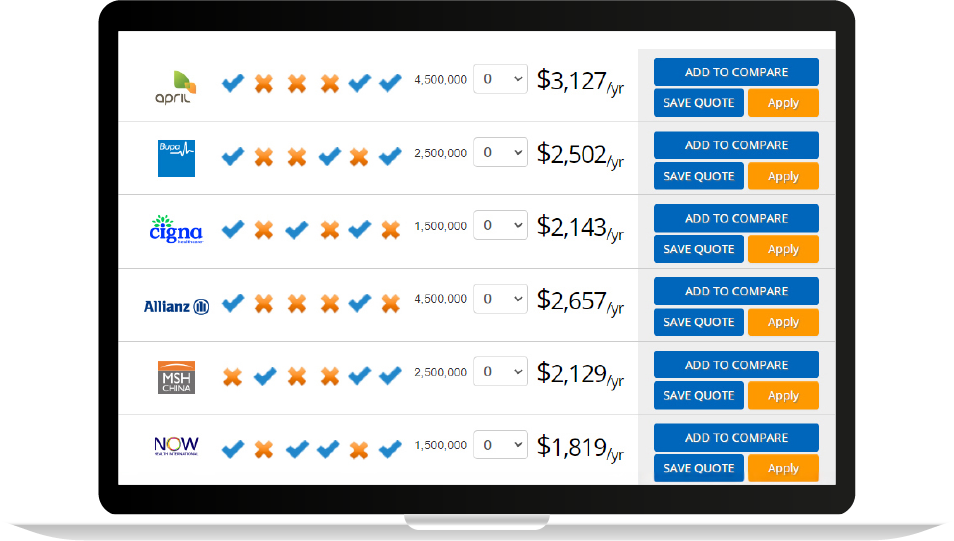
Health Insurance Options For Singapore Expats
Unfortunately for expats, only Singaporean citizens and permanent residents (PRs) are covered by public healthcare. This means that you won’t benefit from the government-run MediSave insurance scheme, though your Singapore employer may provide health insurance as part of your employment package.

It’s important to note that the term “permanent resident” has a different meaning in Singapore than in many other countries. It takes years of residency and an application to Singapore’s Ministry of Manpower to become a PR, and the reality is that most expats in the Lion City will never become one.
As an expat on an employment pass, dependent pass, S-pass, or other types of visa, you can’t contribute to the Central Provident Fund (CPF), which partially funds public healthcare. To put it simply, expats aren’t covered by public health insurance in Singapore. Let’s take a closer look.
Public Health Insurance In Singapore
Singapore aims to provide its citizens and permanent residents (PRs) with affordable access to quality basic healthcare services, requiring most expats to buy private health insurance. The Ministry of Health’s healthcare system comprises the 3M framework: MediSave, MediShield Life, and MediFund.
- MediSave: This national healthcare savings scheme bears interest and is tax-exempt, helping working citizens, PRs, and their dependents from having to pay out of pocket through compulsory personal and employer salary contributions.
- MediShield Life: Replacing MediShield in 2015, MediShield Life is a universal basic medical insurance that’s compulsory for Singaporean citizens and PRs. It provides lifelong protection against costly medical bills and certain expensive outpatient treatments.
- MediFund: Known as the government’s safety net for citizens and PRs in need, MediFund helps cover out-of-pocket payments that exceed MediSave cover.
Private Health Insurance In Singapore
While it’s important to understand public health insurance when moving to Singapore, the reality is that most expats won’t ever get to access these benefits. Without private health insurance in Singapore, be prepared to make out-of-pocket payments for doctor’s visits, hospitalization, and more.
If you have an employer-provided Singapore health insurance policy, the benefits are likely basic at best. Since medical costs for accidents and illnesses can quickly add up, expats are advised to buy additional private health insurance to safeguard themselves against large hospital bills.


International Health Insurance For Expats
For expats who travel or move frequently, international health insurance is a popular and preferable option. With this type of health insurance plan, your policy is not restricted to a specific location (such as Singapore). This gives you the freedom to live and access quality treatment anywhere.

International health insurance plans generally come with high coverage levels, which means you can choose the healthcare provider or facility. Essentially, international health insurance plans are ideal for expats who are looking for more coverage and options on a global scale.
Expats can choose inpatient-only coverage or inpatient and outpatient coverage, depending on their needs. Most expats in Singapore rely on comprehensive international health insurance to cover inpatient treatments, outpatient services, and critical illnesses, to name a few.
Overview of Singapore’s Healthcare System
With highly-trained medical staff and world-class facilities making up Singapore’s healthcare system, expats often wonder whether to opt for public or private healthcare services. While the public sector tends to be more affordable, shorter wait times and comfort add to the private sector’s appeal.
Public Healthcare In Singapore
Public hospitals in Singapore are well-respected, with reputable hospitals handling complex cases that can rival other Southeast Asian countries. However, public medical facilities primarily cater to Singaporean citizens and permanent residents who contribute to the national insurance scheme.
Since expats living in Singapore on work passes don’t get the advantage of these subsidies, there isn’t much difference in pricing between public and private healthcare. With more desirable wait times, facilities, and service levels, expats often choose private healthcare.
Private Healthcare In Singapore
Expats tend to opt for private healthcare in Singapore as the price difference isn’t significant, and they also get access to shorter wait times, more luxurious facilities, and better service levels. With many private healthcare facilities in Singapore, all expats have to do is take their pick.
While it isn’t exactly necessary to secure health insurance to access Singapore’s private medical facilities, having a health insurance plan in place can make a huge difference to your wallet, especially if an unexpected emergency or complicated illness arises.
Hospitals In Singapore
There are three tiers to hospital services in Singapore: A, B (1 and 2), and C.
- Tier A: Along with a private hospital room with an en-suite bathroom and air conditioning, you’ll also get to choose your doctor. However, you must pay for it all.
- Tier C: With the government covering up to 80% of the costs, you can expect an open ward with up to 8 beds, including a shared bathroom and a designated doctor.
- Tier B: As the letter suggests, Tier B offerings are somewhere in the middle.
Be sure to consider wait time, amenities/facilities, quality of doctors and staff, language barriers, and overall comfort before making your selection.
Dental Care
The quality of dental care in Singapore is comparable to healthcare, thanks to highly-trained dentists and Singapore Dental Council regulations. While public and private dentists exist, expats don’t get the lowered rates like locals, so they tend to go for private clinics with shorter wait times.
For those relying on their employer-provided insurance, it’s advisable to add on dental insurance at a minimum.
Pharmacies And Medicine
In Singapore, pharmacies are attached to hospitals and General Practitioner (GP) clinics. There are also many independent pharmacies throughout the city-state. However, a prescription from a local doctor is required, even if you have a prescription from back home. Expats must also pay upfront.
Some pharmacies in Singapore also offer vaccination advice, blood pressure checks, and other basic medical services.
Important Factors To Consider When Buying Expat Health Insurance
If you’re an expat in Singapore on a work permit or S-pass, you’ll need insurance. In fact, your employer must buy health insurance for you to work legally in the city-state. But since employer-provided health insurance plans are generally basic, it’s best to secure additional insurance coverage.
Premium isn’t the only deciding factor when it comes to buying expat health insurance. To make the right choice, keep the following factors in mind when comparing your options:
- Geographical Coverage: Local insurance plans are generally cheaper, but they are also limited to Singapore. With an international health insurance plan, you can retain coverage no matter where you travel or move to.
- Coverage Level: Basic coverage covers inpatient-only treatments, or treatments received during overnight hospital admittance, with premium costs increasing with more coverage (e.g. outpatient coverage, pre-existing conditions, dental/vision coverage, etc.).
- Direct Billing and Claims Process: It pays to work with an insurer who has a wide network of providers and direct billing services, as this allows the hospital to bill them directly. You also want to ensure the claims process is as straightforward as possible.
- Deductibles: This describes how much you must have out of pocket before your health insurance plan starts and the insurance provider begins covering the costs.
- Co-payment: Typically charged as a percentage of the total costs, co-payment is the amount you must pay for a covered treatment after paying the deductible, if any.
- Limits and Exclusions: Always read the fine print since some conditions, situations, or treatments may not be covered by your insurer.
These are just some of the many factors you must consider when securing expat health insurance when moving to Singapore. With so much to think about, it’s easy to see why many expats choose to work with a reputable insurance broker instead of comparing their options on their own.
Frequently Asked Questions
What is the best health insurance for foreigners in Singapore?
The best health insurance in Singapore for foreigners depends on several factors, making it imperative to compare health insurance options from multiple insurers.
Are expats eligible for insurance coverage in Singapore?
Expats can buy health insurance coverage in Singapore, though only expats who are permanent residents can access the national insurance scheme.
How expensive is healthcare in Singapore for expats?
The cost of health insurance in Singapore depends on several factors such as age and pre-existing conditions. In 2022, the average cost of international health insurance for individuals in Singapore was USD $7,023, according to Pacific Prime’s Cost of International Health Insurance Report 2023.
Is it possible for US citizens to buy insurance in Singapore?
Yes, US citizens can purchase health insurance from private insurance providers in Singapore.
Conclusion
From understanding the difference between public and private health insurance options to choosing between public and private hospitals, there are certainly many things to think about when looking for insurance for expats moving to Singapore.
If you’re not a Singaporean citizen or permanent resident, you won’t have access to the city-state’s public health system. However, you can access its top-notch medical facilities and services at a price.
Since the cost of treatments and procedures can quickly add up, your best bet is to buy private health insurance. The good news is that you don’t have to do it alone. With over 20 years of industry experience, Pacific Prime Singapore can compare health insurance plans to meet your needs and budget.
Contact us for impartial insurance advice and a free plan comparison today!

Jantra curates and reports on the results of Pacific Prime’s monthly newsletters, as well as manages Pacific Prime’s Deputy Global CEO’s LinkedIn posts. Complemented by her background in business writing, Jantra’s passion for health, insurance, and employee benefits helps her create engaging content – no matter how complex the subject is.
Growing up as a third-culture kid has given her a multicultural perspective that helps her relate to expats and their families while 8 years of working remotely have given her unique insight into hybrid work arrangements and enthusiasm for employee benefits.
- Jobs in Italy for Americans: Visa, Salary & Career Guide – October 15, 2025
- Healthcare in Singapore vs USA : Funding, Coverage, and Key Differences – August 15, 2025
- Living Abroad in the Philippines : Costs, Visas, and Expat Tips – August 12, 2025



Comments