300x85-png.webp)


 Hong Kong
 Singapore
 China
China Dubai
Dubai Thailand
 United Kingdom
 Mexico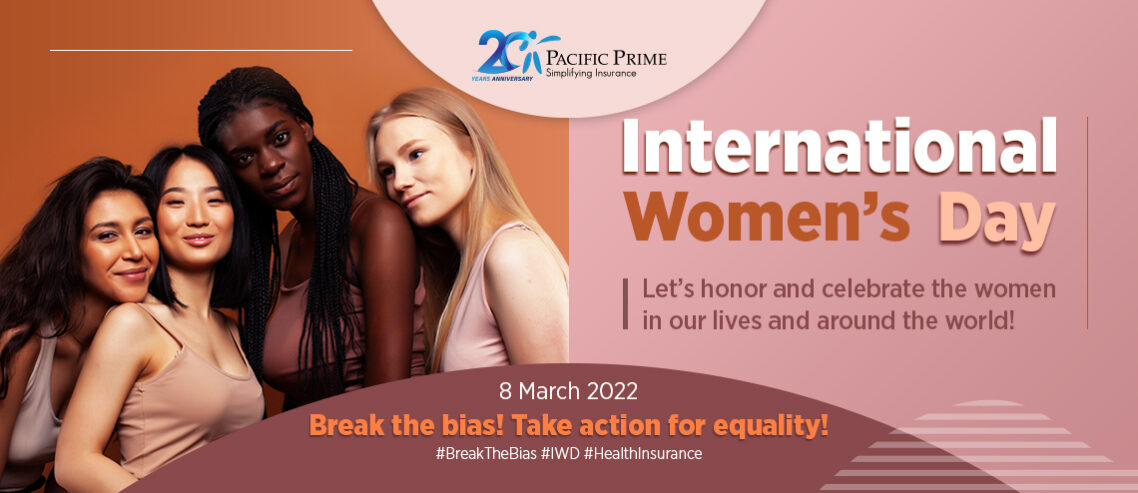
Every year on March 8th, International Women’s Day is celebrated on a global scale. The purpose of the day is to commemorate women’s achievements and take action towards the annual theme (and gender equality in general). This year, the theme is #BreakTheBias. People around the world can show solidarity by crossing their arms in the IWD 2022 pose, as well as diving into resources to learn how to further support the campaign. For International Women’s Day 2022, this Pacific Prime article offers five health tips for women to keep you or the women in your life healthy and strong.
Discover the world’s top
health insurers.
Compare quotes with
a click of the button.
Health tips every woman should know
Plenty of women don’t actually know how to take care of their health or what to look out for. Women around the world manage responsibilities at work and home. In an effort to achieve work-life balance, many women neglect the one thing they shouldn’t: their health.
With that said, lack of information can leave a lot of women unsure about what to even look for and how to prioritize their health. While a healthy diet and lifestyle can help both women and men keep diseases at bay, there are also aspects of health that are unique to women. Here are five women’s health tips you need to know.
1. Know the most common women’s health issues
Since women and men are biologically different, some health conditions that affect women don’t affect men and vice versa. For instance, women are at risk for menstruation and reproductive health issues like:
- Irregular periods
- Amenorrhea (absence of periods)
- Endometriosis
- Menopause
- PCOS
- Uterine fibroids
Women are also affected by pregnancy-related conditions such as:
- Gastrointestinal problems
- Gestational diabetes
- High blood pressure
- Miscarriage
- Thyroid problems
What’s more, women are also more likely to develop autoimmune diseases like lupus, psoriasis, rheumatoid arthritis, and systemic sclerosis. As women get older, they become more prone to breast cancer and osteoporosis (often called “soft bones”) as well.
Health conditions can affect women and men differently too. While men usually experience chest pressure during a heart attack, women experience fatigue, shortness of breath, nausea, and vomiting. Likewise, STDs may show up differently in women too – who may also experience more side effects from medicines due to reasons like male bias in drug development.
2. Take charge of your sexual health
From sex and satisfying relationships to STIs to pregnancy, sexual health involves all aspects of your reproductive life. Some women have a tough time discussing their sexual health for many different reasons. Whatever the reason, it’s important to realize that open communication is key to taking care of most issues.
Some women find it helpful to let their partner know they’re shy or uncomfortable talking about sexual health and taking it one step at a time. The more confidence you develop, the easier it’ll be to discuss topics like safe sex, STIs, and what you need emotionally and physically. If you’re unfamiliar with birth control, contraceptives, and menstrual cycles, take the time to learn about them – especially if you don’t want to get pregnant.
When you take charge of your sexual (and overall) health, you start to build a positive body image and respect your own opinions – as well as choose partners that do the same.
3. Go for regular health checkups
Any doctor will advise you to get regular health checkups, regardless of your health condition. Checkups allow doctors to look for certain conditions at different stages of life, particularly if a condition runs in the family. For instance, the risk of breast cancer, diabetes, and heart diseases go up if a person in the family has it. Health screenings can also detect health problems early on, oftentimes before any signs or symptoms.
Some of the most important health tests for women include pap smears and mammograms, as well as cholesterol, blood pressure, and blood sugar levels. Additionally, twice a year teeth and eye checkups are recommended.
4. Be active
By keeping you fit and preventing certain diseases, exercise is good for any gender. But exercise is especially important for women because of its role in helping with osteoporosis (as well as cancer, diabetes, and heart disease). Regular exercise helps improve muscle mass, which usually starts declining in a woman’s 30s, and reduces the rate of bone loss.
Regardless of your age, it’s never too late to start working out and reaping the benefits. However, it’s advisable to speak to your doctor before starting a new exercise regime, especially if you have diabetes, high blood pressure, obesity, or other health conditions.
If you’re feeling overwhelmed at the thought of exercising as a beginner, you’re not alone. Lifting weights, swimming, walking, jogging, hiking, and dancing are some of the many exercises you can give a go. A combination of cardio and weight-bearing/resistance exercises at least 3-5 times per week is ideal for women. Since working out promotes positive self-image, it’s imperative for women’s mental health too.
Further reading: Best exercises for mental health
5. Recognize signs of depression
Speaking of mental health, women are also more prone to anxiety and depression than men. Yet sadness and depression are often confused, with the latter being a very real condition that can affect anyone. Common signs of depression to look out for include:
- Irritability
- Hopelessness
- Inability to focus
- Loss of interest
- Persistent fatigue
- Weight loss
- Digestive issues
- Body aches
- Sleep problems
- Suicidal thoughts
There are also certain types of depression that are exclusive to women, such as:
- PMS
- Premenstrual dysphoric disorder (PMDD)
- Postpartum depression
- Perimenopausal depression
Signs of depression can vary between people. It’s best to discuss all your symptoms with a health professional so they can correctly diagnose you for proper treatment. Since stress is linked to a higher risk of anxiety, depression, and other health issues (e.g. heart disease), look for a stress-reduction technique that works for you and continue to use it.
Put your health first with Pacific Prime
Along with the female health tips above, another way to prioritize your health is to secure health insurance. With the right health insurance plan, you can have peace of mind knowing that you can access quality healthcare whenever you need it. But how do you choose the right plan?
If you’re planning on having a baby, maternity health insurance is a must. However, it does come with a waiting period of 10-12 months on average, so secure it early! If you travel or move countries often, then international health insurance could save you money and stress in the long run. The list goes on.
Fortunately, narrowing down your insurance options doesn’t have to be daunting when you work with a reputable insurance broker like Pacific Prime. We compare health insurance plans from top insurers to ensure you get the best plan for your needs and budget, as well as offer value-added services to enhance your experience.
Contact us for impartial advice or a free quote today!

Jantra curates and reports on the results of Pacific Prime’s monthly newsletters, as well as manages Pacific Prime’s Deputy Global CEO’s LinkedIn posts. Complemented by her background in business writing, Jantra’s passion for health, insurance, and employee benefits helps her create engaging content – no matter how complex the subject is.
Growing up as a third-culture kid has given her a multicultural perspective that helps her relate to expats and their families while 8 years of working remotely have given her unique insight into hybrid work arrangements and enthusiasm for employee benefits.
- Jobs in Italy for Americans: Visa, Salary & Career Guide – October 15, 2025
- Healthcare in Singapore vs USA : Funding, Coverage, and Key Differences – August 15, 2025
- Living Abroad in the Philippines : Costs, Visas, and Expat Tips – August 12, 2025



Comments