300x85-png.webp)


 Hong Kong
 Singapore
 China
China Dubai
Dubai Thailand
 United Kingdom
 Mexico
The Affordable Care Act, officially called the Patient Protection and Affordable Care Act (PPACA), was enacted in 2010 with the goal of lowering the uninsured rate, increasing insurance quality and affordability, and generally decreasing the burden of healthcare costs for people in the USA.
Discover the world’s top
health insurers.
Compare quotes with
a click of the button.
In our latest report on the cost of health insurance, the US is again the most expensive place for health insurance. One major reason is that healthcare is very expensive in the US. People simply must have health insurance if they set foot on American soil.

What Exactly is the ACA?

The Affordable Care Act (ACA), commonly called Obamacare, was the major outcome of an overhaul of the US healthcare system by the US government. If you are an expat considering moving to the US or will be moving there shortly, there are some things you need to know about the ACA.
The US government set out a number of mandates for the ACA, two of the most important being aimed at insurers and individuals. For insurers, they must:
- Accept all applicants
- Cover a set list of conditions (including many pre-existing conditions)
- Charge the same premiums for all applicants
Individuals are required to secure compliant insurance plans if they do not have one provided by their employer or a public insurance plan. Since your ACA-compliant plan is proven via your tax returns, should you not have the required level of coverage, in the old days you could face hefty fines.
For an authoritative interpretation of the ACA, please visit the official website or consult a legal professional.
Who Needs to Secure ACA Plans?
Two major groups are required to secure ACA-compliant plans: individuals and companies. There can be some confusion whether the ACA applies to inbound or outbound expats, or both, and whether you are expected to secure a compliant plan or not.
The ACA Mandate for Companies
According to the Internal Revenue Service (IRS), if your company employs more than 50 people, you are required to provide ACA-compliant health insurance to at least 95% of full-time employees and their dependents under the age of 26.
If you have fewer than 50 employees, you are not required to provide health insurance to them, but you are still encouraged to do so. To help cover the costs of health insurance for these smaller groups, the IRS offers tax rebates and options for offsetting the cost of providing health insurance.
For more information on the ACA for employers, check out the IRS website here.
The ACA Mandate for Individuals and Their Families
Generally speaking, all individuals who pay tax in the US are required to also secure an ACA-compliant plan either through their employer or through insurance marketplaces. This mandate also extends to spouses and dependents under the age of 26.
In other words, if you are required to submit a tax return with the IRS, you are very likely required to also have secured ACA-compliant health insurance.
There are a number of exemptions, which are explained in great detail in this PDF from the Congressional Research Service. You can also visit the IRS’s ACA for individuals website for more details.
The ACA Individual Mandate and Expats
As an outbound expat (someone who is a US citizen, but will be leaving for work overseas), you are still legally required to have an ACA-compliant plan if you live abroad for 330 days a year or less. Should you go for, say, six months and then return, you will still need a compliant plan.
The specifics of how this applies can vary based on personal circumstances, and the IRS has stated that more comprehensive guidance will be made available.
For those who do spend most of the year outside of the US (more than 330 days), you are deemed to have an ACA-compliant plan, and can tick the relevant box when you file your tax return.
As an inbound expat, if you are paying taxes in the US and spend 35 days or more a year in the US, you will be required to secure a compliant plan. This mandate applies to individuals required to file tax forms, including:
- US citizens
- Legal US residents
- Resident aliens
- Non-resident aliens
Some students and diplomats are exempt from the mandate, but the vast majority of inbound expats will need a compliant insurance plan.
What Happens If I Don’t Secure a Compliant Plan?
Previously, individuals who did not report adequate coverage would be fined, or as the IRS put it, you would be required to “make a shared responsibility payment.” The exact amount would vary based on a number of conditions, including your annual salary, dependants, etc.
The good news is that, since 2019, this “shared responsibility payment” is no longer charged. You can learn more about the fate of this payment here.
Before 2019, the US government officially followed a “play or pay” policy when it came to the ACA and the securing of plans. If you did not secure a plan that met the requirements set out by the government, you would be fined, but you would not be arrested or deported.
For businesses these fines are still relevant and they are referred to by the IRS as “Employer Shared Responsibility Provisions,” and they will vary depending on the situation.
For example, if you have over 50 full-time employees and do not offer health insurance to at least 95% of your employees you will be fined at least USD $2,000 per employee with the first 30 employees not being counted. More information on the fines can be found here.
Can I Secure a Plan Before I Leave for the US?
For that, you have many options to choose from. You can choose to secure international health insurance for your time outside the USA and an ACA-compliant plan for your time inside the USA, or you can secure an ACA-compliant international health plan for your health needs anywhere.
The reason why global health insurance is recommended is that, as an expat heading to or leaving the US, there is a good chance you will be returning to your home country for a vacation at least once a year.
Frequently Asked Questions
Do expats need ACA-compliant health insurance in the US?
Expats living in the US for 35 days or more a year must secure ACA-compliant health insurance if they are subject to U.S. taxes.
What options do expats have for health insurance before moving to the US?
Expats can either secure separate health insurance plans for US and international coverage, or obtain an international health plan that meets ACA requirements for comprehensive protection.
What are the penalties for not having ACA-compliant insurance?
There are no criminal penalties. It used to be that individuals would face fines if they did not maintain ACA-compliant coverage, but this penalty has been eliminated for tax years after 2018.
What are the main objectives of the Affordable Care Act (ACA)?
The ACA aims to make health insurance more accessible, expand Medicaid coverage for low-income individuals, and promote innovative healthcare delivery methods to reduce costs overall.
How does the ACA protect individuals with pre-existing conditions?
Insurers are prohibited from denying coverage or charging higher premiums based on pre-existing health issues, ensuring that everyone can obtain necessary care without financial penalties.
Until what age can young adults remain on their parents’ health insurance?
Individuals can stay on their parents’ health plans until they turn 26, regardless of their marital status, financial independence, or living situation.
What happens when a young adult turns 26 regarding health coverage?
Coverage ends on their 26th birthday, but they may qualify for a Special Enrollment Period to secure new insurance outside the regular enrollment timeframe.
Can insurance companies cancel my coverage for minor mistakes?
Insurers cannot cancel your policy due to simple errors on applications. However, they can cancel for intentional misrepresentation or non-payment of premiums.
What are my rights if an insurer denies a claim?
You have the right to appeal a denial, either through an internal review by the insurer or by taking the case to an independent external reviewer.
Are there limitations on annual or lifetime coverage under the ACA?
The ACA prohibits insurance plans from setting annual or lifetime dollar limits on essential health benefits, this ensures comprehensive coverage for necessary medical care.
What preventive services are covered without cost-sharing?
Most plans cover preventive services like vaccinations, screenings, and wellness visits at no additional cost when provided by in-network healthcare providers.
Can companies avoid providing health insurance for all employees?
Employers with fewer than 50 full-time employees are not mandated to provide health insurance, but they are encouraged to do so and may receive tax incentives.
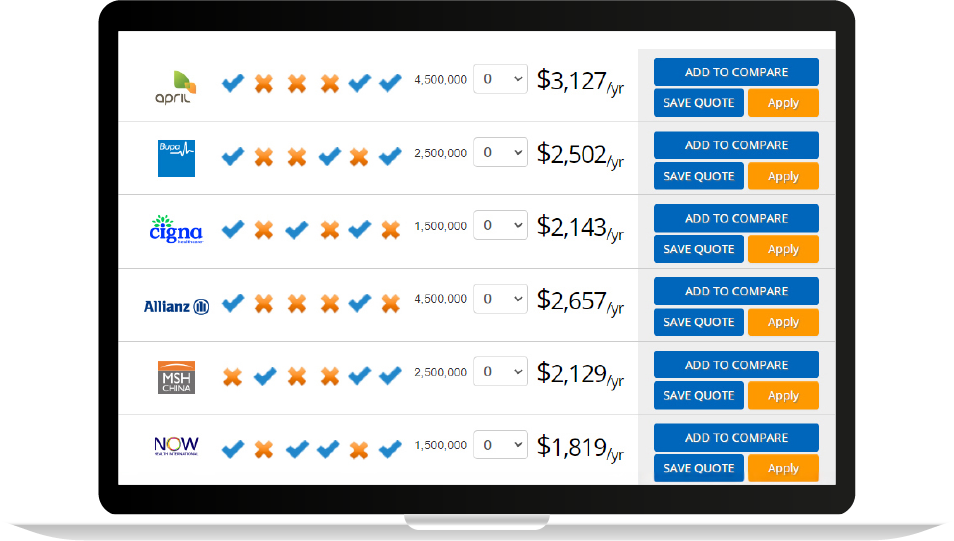
Conclusion: Compare Plans and Quotes Now
At Pacific Prime, we have a full range of insurance plans, including international health insurance and medical evacuation (medevac) plans for you to choose from. We also offer family health, maternity health, dental insurance, travel insurance, and numerous other types of plans.
To learn more about our insurance plans with US coverage (including ACA-compliant international health insurance plans) or for a free quote, contact one of our professional advisors today! You are also welcome to compare plans using our online comparison tool.

Since joining Pacific Prime, Martin has become even more aware of the gap between the true value of insurance products and most people’s appreciation of it, and developed a passion for demystifying and simplifying matters, so that more people get the protection they need at a cost they can easily afford.
In his free time, Martin attends concerts of various genres, and plays the violin with piano accompaniment he pre-recorded himself or played live by his niece.
- Bali Visa on Arrival: Essential Guide for Travelers – October 17, 2025
- Cost of Living in Costa Rica: Expat Guide – October 15, 2025
- Top 11 Insurance Companies in Curaçao for Expats – October 8, 2025



Comments